


Two systems in one unit
A heat pump cools and heats through the same coil and compressor. If it fails in August, the same part likely needed looked at come January.
Skip searching for a heat pump pro and answer a few questions instead.
Skip the searchWhen your heat pump quits, the first thing to check is whether it's the cold side or the heat side giving out, because that changes how fast you need help. Most Oklahoma homes heat with gas, so a dead heat pump in winter usually means a backup system is covering for it. In summer, with no AC and the air already sticky, there's nothing to fall back on.
Start with the thermostat. Make sure it's set to the mode you want and the batteries aren't dead. Next check the breaker box for your outdoor unit and your air handler, since a tripped breaker is a common reason a heat pump stops cold. If both look fine and the system still won't run, or it runs but blows air that isn't hot or cold, it needs a repair technician. In winter, your gas furnace likely keeps the house warm while you wait. In summer there's no backup, and with how muggy it gets here, a house without working cooling turns uncomfortable fast, so that's the season to treat it as urgent.
Check the thermostat is set to heat or cool and powered on
Look at the breaker box for a tripped breaker on the heat pump
Check the outdoor unit for ice buildup covering the coil
Listen for the outdoor unit running while the indoor fan blows cold air




A heat pump cools and heats through the same coil and compressor. If it fails in August, the same part likely needed looked at come January.
Most Oklahoma homes heat with gas, so a dead heat pump in winter is less urgent than a dead one in July, when nothing else is cooling the house.

If it quits in July, you'll know within an hour. The house holds heat fast once the outdoor unit stops pulling it out, and with Oklahoma humidity sitting on top of that, the rooms feel worse than the thermostat number suggests. If it quits in January, you've got the gas furnace to lean on, so nobody's cold, but the system still needs to get fixed before summer asks something of it again.
Finding someone to look at it is its own chore. You'd normally be pulling up names, calling two or three companies, explaining the same thing about the outdoor unit three separate times, then sitting on quotes trying to guess which one is honest. This page skips that part. You get matched with one licensed Oklahoma contractor who already knows what tends to fail on heat pumps through the summers here, and you're not fielding calls from five companies trying to win the job.


The outdoor unit stops moving heat out of the house, so rooms climb fast once the air stops feeling cool. With the humidity Oklahoma sits under in summer, the house feels worse than the thermostat number suggests. A stuck contactor, a failed capacitor, or a compressor that won't start are common reasons the outdoor unit goes quiet while the indoor fan still blows. Someone waiting at home through the afternoon needs that outdoor unit running again, not just diagnosed.

Most homes here lean on gas furnace backup once temperatures drop, so a heat pump failure in winter often means the furnace is already carrying the load without anyone noticing right away. That buys time the summer case doesn't give you. Still, the heat pump is doing less work in defrost cycles or mild January days, and leaving it broken means the furnace runs more than it should and the system isn't working the way it was set up to.
At 13.21 cents a kilowatt-hour, running your heat pump's backup strip heat or emergency heat setting for a few days while you wait on a repair won't wreck your bill. That's worth knowing if the fix takes a little time to schedule.
EIA-861 2025 statewide residential average
If the compressor won't kick on at all, your indoor fan may still blow air, just not hot or cold. It's easy to mistake that for the system working, especially if you're not standing right at the vent.
Air moving from the vent doesn't mean the heat pump is doing anything. Put your hand near the register. If it's blowing room temperature air in January, the compressor outside has likely stopped, not just slowed down.


The pro who reaches out is licensed in Oklahoma.
Describe what your heat pump is doing once, in one form.
You're not committing to anything by asking.


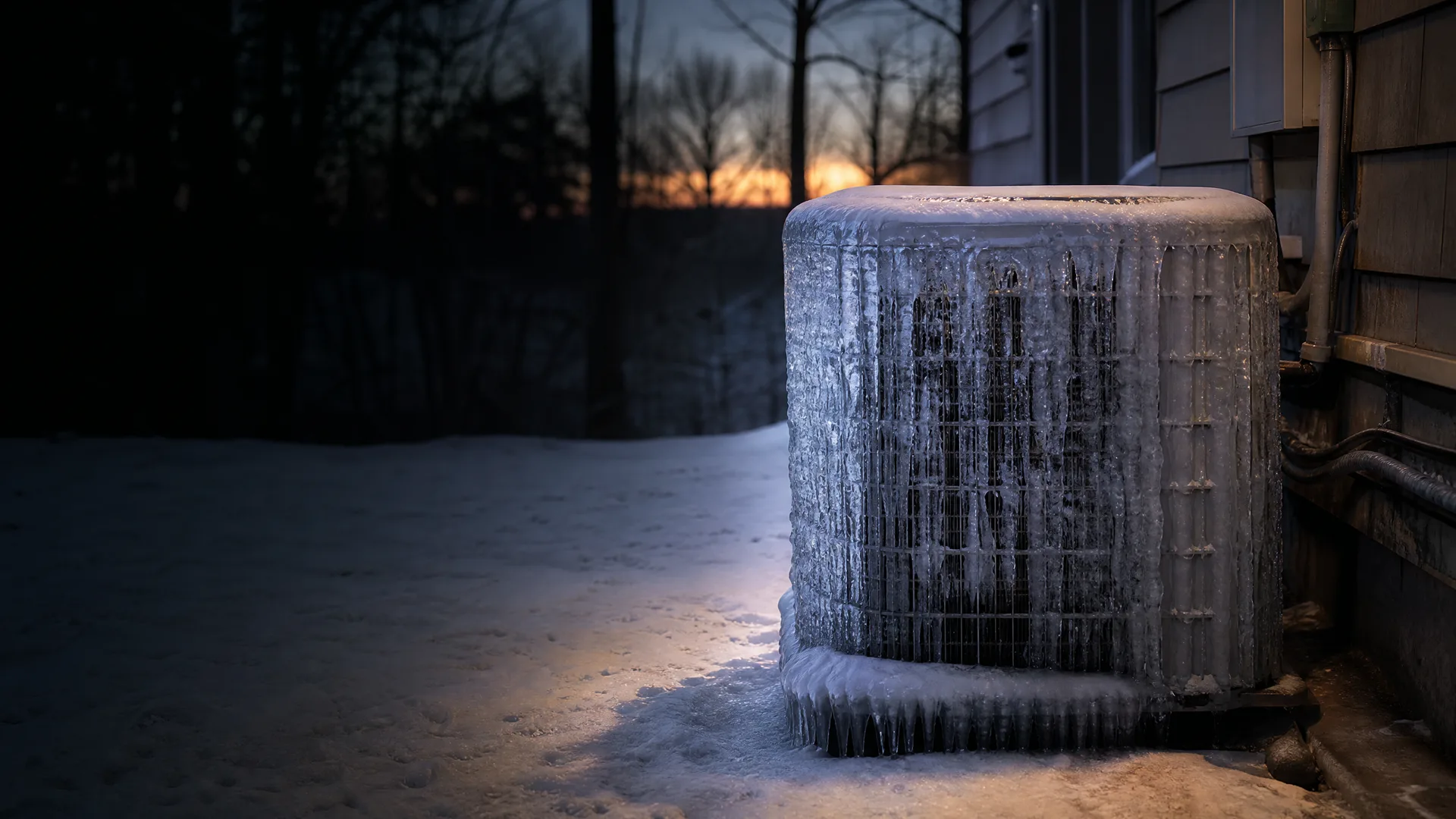
Six in the morning and still dark, you step out in a robe to grab the trash can before the truck comes. Frost is on the grass. Past the fence line, the heat pump sits coated in ice, thick over the coil and climbing the sides of the cabinet, past anything that looks like the normal frost that melts off on its own during a defrost cycle. The fan isn't turning. Inside, the house still feels warm enough, the gas furnace backup is carrying the load, but you stop at the sight of it, can in hand, cold coming through your robe, looking at a block of ice where a working unit should be.
You'll likely catch it at the vent before you catch it outside. Air still moves but it's room temperature instead of hot or cold, or the system runs and runs without the house changing. In summer the rooms feel sticky faster than the thermostat suggests, since Oklahoma humidity sits on top of whatever heat is building up. In winter, if the backup strip heat hasn't kicked in on its own, you may notice the air from the vents turn cool instead of warm. Check if anyone in the house is more sensitive to heat or cold, since they'll usually notice before the thermostat does. A system that's been struggling for a while is more likely to leave you without heat or cooling right when you need it most.

Summer air in Oklahoma carries a dew point around 66°F, according to NOAA climate data, and that's the number that makes a room feel sticky even with the thermostat set low. A heat pump has to pull that moisture out of the air as it cools, not just drop the temperature. When the system is running low on refrigerant or the coil is dirty, it loses the ability to do both at once. You'll feel it as a house that's cool enough by the thermostat but still clammy, with damp spots on furniture and glass that won't quite clear.
NASA POWER T2MDEW county cells weighted by homes
A heat pump that stops working is still a system you can check before you call anyone. Thermostat, breaker, ice on the coil, whether the outdoor unit is running at all. Those four things tell you most of what's wrong and how fast it needs attention. Gas backup means a failure in January is an inconvenience, not an emergency, and a cheap kilowatt-hour means running the emergency heat setting for a few days won't cost you much while a repair gets scheduled. July is the season with less room to wait, since the same coil and compressor that failed on you now are the ones that would have carried you through winter too. What you've read here is enough to know what you're looking at and whether it can wait or can't. A local contractor who works on these systems every season can take it from the diagnosis you've already started and finish the job.


Skip the search
Only one pro gets your request, so you hear from one company.
