






Why your heat pump bill is high in Oklahoma summers

RepairHeat PumpOklahoma
Step 1 of 2

What ZIP code is the job in?

A heat pump bill climbs in an Oklahoma summer because the system is working against both the outdoor heat and the humidity sitting on top of it. A heat pump moves heat out of the house, and the hotter it gets outside, the harder the compressor runs to push that heat out. On a sticky day it's also pulling moisture out of the air, which takes more run time even when the thermostat barely moves. If the bill looks high for the degree of cooling you're getting, the system is likely losing ground somewhere: a dirty coil, a low refrigerant charge, a fan that isn't moving enough air. None of those let the heat pump cool the house without running longer and longer to get there. Catching that now, before August's heat pushes it further, keeps one weak part from turning into a bigger repair and a worse bill.

A smiling man in a navy long-sleeve shirt sits at a wooden table in a kitchen and dining area, with a ceramic mug, a potted plant, and a sliding glass door behind him.
A smiling bearded man in a green henley shirt stands at a kitchen island with a gray mug, looking off to the side, with a dining area and shelves blurred behind him.
A smiling bearded man in a navy sweater sits at a white kitchen island with a ceramic mug, with open shelves, potted plants and a range hood behind him.
A smiling man in a dark olive long-sleeve shirt sits in a kitchen beside a counter with a dark mug, with a dining table, sideboard and hallway visible in the blurred background.
A closed dark laptop and a ceramic mug of coffee on a wooden dining table, with wooden chairs, a dark kitchen cabinet with cutting boards and a potted plant, and a leafy plant by a window in the background.

What a high bill is telling you about your own system

If your bill jumped and the house still feels sticky by afternoon, something is making the compressor run longer than it should. A dirty outdoor coil, a low refrigerant charge, a fan motor losing strength, any of these make the system run and run without catching up. You pay for every extra minute it runs, whether or not it actually cools the house.

Left alone, that same strain tends to end in a breakdown on the hottest week of the year, which is the worst time to be without one in Oklahoma. Sorting that out yourself means searching for a contractor, calling around to see who can even come out, explaining the same problem over and over, then weighing quotes against each other while the house stays warm. Sending the form here hands that part off, so the only thing left on your plate is answering the door.

A living room corner with a beige sofa and cushion, a round wooden coffee table holding a pale ceramic vase of eucalyptus stems and a wooden bowl, and a curtained window with a potted plant above a latticed radiator cover in the background.
A gray outdoor heat pump unit on a concrete pad beside a house with horizontal lap siding, connected by conduit and a flexible line to a wall-mounted disconnect box, with low shrubs and mulch nearby.

Running the way it should

The outdoor unit sits clean on its pad, fan grille clear, lines running neat to the house. Air moves through the coil without fighting dirt or debris. In an Oklahoma summer this is what lets the compressor cycle normally instead of running flat out just to keep up with the heat.


An outdoor air conditioner condenser unit on a concrete pad beside a house with horizontal siding above a concrete block foundation, with insulated refrigerant lines and a vertical white pipe on the wall.

Working harder than it should

Weathering on the cabinet, lines running along a foundation that's seen some years, this is a unit under strain. A coil caked with grime or a fan motor losing strength forces the compressor to run longer for the same cooling, and that extra runtime is what shows up on the bill.

Is your heat pump running nonstop and still losing?

You'll notice the outdoor unit never seems to shut off, even at night when it's cooler. Inside, a room or two stays warmer than the rest of the house no matter where you set the thermostat. The vents blow air that feels weak or just lukewarm instead of cold. Sometimes there's a musty smell near the indoor unit, or you catch the outdoor fan straining, rattling, or icing over on the coil. None of this fixes itself. A compressor forced to run long hours wears down faster, and a refrigerant leak or failing part left alone usually turns into a bigger repair, or a full breakdown on the next hot afternoon.

A gray outdoor heat pump unit on a concrete pad beside a house with horizontal lap siding, with a conduit running to a wall-mounted disconnect box and a green shrub to the left.

Clean coil, normal draw

This unit sits clean on its pad, fins clear, the line to the disconnect box neat. Air passes through the coil without resistance, so the compressor pulls the power it was built to pull and shuts off when the house is satisfied.

An outdoor air conditioning condenser unit with dusty coils sits on a concrete pad against light horizontal siding, with an electrical disconnect box and refrigerant lines on the wall and a shrub and mulch at left.

Soiled coil, climbing draw

Dirt built up on this coil like this makes the compressor work to push heat through it. It runs longer for the same drop in temperature, and that extra run time is what shows up on the bill at the end of the month.

Fix the problem or pay for it monthly

Fix it now

  • A contractor can check the refrigerant charge and clean the outdoor coil in one visit, and the compressor goes back to cycling normally instead of running straight through.
  • Catching a weak capacitor or a failing fan motor while it still runs, even poorly, usually costs less than waiting for it to quit outright in July.
  • A repair now means the house holds its temperature again this summer, not next summer.
  • A tech who finds one worn part can often tell you if others are close behind, so you're not surprised again in August.
  • Oklahoma power is cheap, but a compressor running nonstop still pushes the bill up every month it's ignored.

Let it ride

  • The system keeps running, so nothing forces the issue, and the bill stays high as long as the real cause goes unaddressed.
  • A low refrigerant charge left alone can make the compressor work harder for months, and that wear doesn't reverse itself.
  • The room that's warmer than the rest of the house stays that way, and so does whatever is making it that way.
  • A small problem, a dirty coil or a weak fan motor, tends to turn into a bigger one if the compressor keeps compensating for it.
  • Every sticky afternoon the system limps through adds to a bill that a repair would have brought back down.
  1. The compressor pulls in hot Oklahoma air and refrigerant together

  2. Refrigerant carries that heat out to the outdoor coil

  3. The outdoor fan pushes air across the coil to release it

  4. A clean, charged system shuts the compressor off once the house cools

A gray outdoor condenser unit on a concrete pad beside a house with horizontal lap siding, with a wall-mounted disconnect box, conduit and insulated refrigerant lines, a shrub at left and gravel at right.
This outdoor unit draws the power it was built to draw, nothing more.
An outdoor air conditioning condenser unit on a concrete pad beside a house with horizontal lap siding, with a green shrub to the left and a wide concrete slab in the foreground.
A dirty coil or a weak capacitor makes this same unit pull harder just to keep up.
A two-story cream-colored house with horizontal siding and a gray hipped roof, flanked by large green trees and shrubs, with a concrete walkway crossing a lawn to a wet street in the foreground.

A summer dew point averaging 66°F across June, July and August is what makes an Oklahoma afternoon feel heavy even when the temperature itself isn't the worst part, and that's the air your heat pump has to wring moisture out of every time it runs. A heat pump pulls humidity out of the air as a side effect of cooling it, and the higher the dew point, the more water it has to pull before the house feels dry. At 66°F that's steady work, cycle after cycle. You'll notice it as a system that runs longer than the thermostat setting seems to call for, and a house that still feels damp even once it's cooled down.

NASA POWER T2MDEW county cells weighted by homes

An outdoor air conditioner condenser unit on a concrete pad beside a house with beige vinyl siding, with a gray electrical disconnect box and insulated refrigerant lines on the wall and river rock to the right.
Before you get your heat pump repair
A gray outdoor condenser unit sits on a concrete pad against a house wall with horizontal siding above a stone veneer base, with an electrical disconnect box and conduit on the wall and a leafy shrub in mulch to the left.
After you get your heat pump repair

Let someone else find the pro

Describe your heat pump job once, to one pro.

You only hire the pro if you want to.

A heat pump sized for your house is built to cycle off once it satisfies the thermostat, not to run straight through an afternoon.

When it can't shut off, every hour of extra runtime shows up on the next bill, which is the part a contractor can still catch before the compressor itself wears down.

Power costs 13.21 cents per kilowatt-hour statewide

At 13.21 cents per kilowatt-hour, every extra hour your compressor runs trying to catch up shows up fast. A heat pump that's struggling doesn't just run longer, it pulls harder the whole time, and at that rate the difference lands squarely on your bill.

EIA-861 2025 statewide residential average

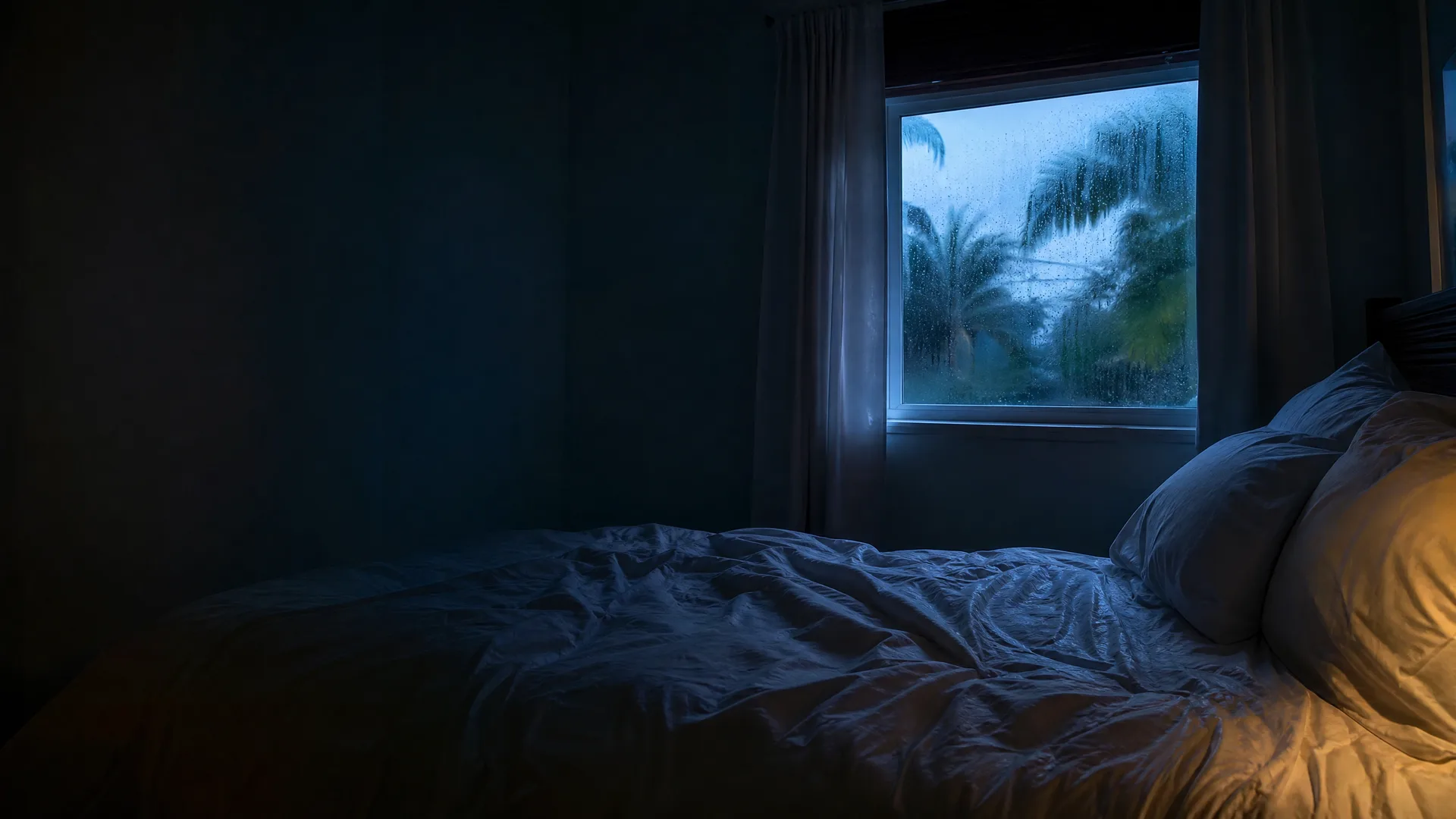
A dark bedroom with an unmade bed and pillows beside a curtained window showing rain-streaked glass and palm foliage outside.

You wake up a little after two and the sheets are damp against your back. The window unit light on the thermostat reads a degree or two above where you left it, and outside the bedroom window the glass has fogged at the corners the way it does on the thick August nights. You kick the sheet off, then pull it back because the air coming from the vent doesn't feel like air moving at all. Down the hall you can hear the outdoor unit still running, same as it was when you went to bed. You lie there doing the math on how many hours that makes it, and whether it ever actually stopped.

Why does my heat pump short cycle in summer and still run up the bill?

You've noticed the outdoor unit kicking on, running a few minutes, then shutting off, over and over, instead of settling into a steady cycle. The house still feels warm and the bill is climbing. It seems backwards that something turning off so often could cost more, but short cycling is one of the most expensive ways a heat pump can run.

Short cycling means the compressor is starting and stopping before it ever gets the chance to run efficiently

A compressor pulls the most power in the first few minutes after it starts, before it settles into a steady draw. If something cuts the cycle short, a low refrigerant charge, a dirty outdoor coil, or a thermostat sensing the wrong temperature, the compressor shuts off before it reaches that steady point and starts again a few minutes later, paying that startup cost over and over. It never gets the long, efficient run it was built for. In an Oklahoma summer, with the compressor already working against heat and humidity, those repeated restarts add up fast on the meter even though the unit looks like it's working less, not more.

A man in a blue T-shirt sits on a light gray sofa, laughing while looking at an open laptop in the foreground, with a framed picture, lamp and potted plant behind him.
A bearded man in a blue and brown plaid flannel shirt stands indoors looking out a window at snow-covered trees, with a ceramic mug on the windowsill.

Where that leaves your bill

  • A high Oklahoma summer bill means the compressor is running longer than it should, not that your house needs more cooling.
  • A dirty coil, a weak capacitor, or a low refrigerant charge can all make a heat pump work harder for the same result.
  • Catching the problem now costs less than waiting for the compressor itself to fail in August heat.
  • A contractor can find and fix the specific cause in one visit instead of you guessing at it all summer.
  • Sending one form replaces calling around, repeating the same problem to each contractor, and sorting through quotes yourself.
  • Once your heat pump cycles normally again, the bill reflects the house it's cooling, not a system fighting itself.

Your heat pump bill went up because something in the system is making the compressor work past what your house actually needs. That's the whole answer. A dirty coil outside, a capacitor that's lost its strength, refrigerant that's low, any of these will do it, and each one shows up the same way on the thermostat even though the fix is different underneath. The house doesn't need more cooling. The system needs to stop fighting itself.

Left alone through an Oklahoma summer, that extra strain doesn't ease up on its own. The compressor keeps absorbing the cost of whatever's wrong, and it's the part most expensive to replace if it gives out in August heat. Catching the cause now, while the unit is still running, costs less than waiting for it to quit.

Finding who can look at it is usually the part that eats your afternoon. Calling a few contractors, explaining the same symptoms to each one, waiting on callbacks, then comparing quotes that don't quite match because nobody saw the same thing. Sending one form instead means that search is no longer sitting on your list. A contractor still has to find the actual cause and fix it, that part doesn't get shorter. But once someone's looked at the coil, the charge, the capacitor, and corrected whatever's off, the compressor goes back to cycling the way it's built to, and the bill goes back to reflecting the house, not the system struggling inside it.

A stone house with a dark standing-seam metal roof and a stone chimney sits among low shrubs, with a broad scrub-covered plain and distant hills under a hazy sky at low sun.

One request and it's handed off

Hand it over

Asking costs nothing, and the choice to hire stays yours.

Sending this request means you're not the one who has to track down a contractor, call around to see who's available, and explain the same bill problem over and over. Send it once and that search is off your plate.