After this form, you can stop searching for a duct system pro.
Duct cleaning gets pushed hard, and it's fair to ask whether it does anything in a house like yours. In Tulsa County, the answer depends on what's actually going on in your ducts, not on a schedule some company printed on a flyer.
Summers here are muggy and long, which means your AC runs hard for months and moves a lot of humid air through that ductwork. Winters are cold, and most homes around Tulsa heat with gas, so the same ducts carry furnace heat the rest of the year. Dust, pet hair, and in some homes a touch of mold from all that summer humidity settle in over time. If anyone in the house has allergies that flare up indoors, or you've noticed dust resettling on surfaces within a day of cleaning them, that's worth checking into. If your vents look clean and nobody's having breathing trouble, you may not need it yet.
What's harder to judge on your own is the condition inside the ducts themselves, whether there's buildup heavy enough to matter or a hidden leak feeding dust in faster than it should. That takes someone looking with a camera or at least pulling a vent cover and checking by hand.
Finding that person is usually the slow part. Calling a few companies, explaining your situation to each one, waiting on quotes that don't line up because nobody looked at the same thing. Send the form on this page and that search is done. You're not left sorting through ads or guessing which company actually does real inspection work before they quote you. The next step is a conversation with someone who can tell you, for your house, whether cleaning is worth doing now or worth waiting on.
It's worth it when there's a real reason behind it, not just because the ducts haven't been touched in a while. If you've had rodents or a bad water leak get into the ductwork, or someone in the house is dealing with allergies that seem to track with how long the AC or furnace has been running, cleaning the ducts can genuinely help. Tulsa's long muggy summers push a lot of air through those ducts for months at a time, and that air carries dust, pollen and whatever else is loose in the system straight into the house. If you can see dust kicking out of the vents when the blower kicks on, or there's visible buildup inside the duct openings, that's a sign worth acting on. But if the ducts look clean and nobody's having breathing trouble, cleaning them on a schedule won't buy you much. The honest answer is it depends on what's actually in your ducts right now, not on a number of years that's passed.
So does your duct system actually need cleaning here?
Half the homes here were built by 1979
Half the homes in Tulsa County were built in 1979 or earlier. An older duct system has had more years to collect dust, and more chances for a leak or a pest to get into it.
Heat runs October through April
Heat runs about seven months a year here, October through April. That's seven months of air moving through the same ducts, carrying whatever has settled in them.
Cooling runs May through September
Cooling runs May through September. Switching between the furnace and the AC twice a year means the system sits idle part of the time too, which is when dust settles into the ducts.
ACS 2020-2024 · NOAA nClimDiv 1991-2020
How a duct cleaning actually works
A cleaning runs a vacuum collection system through the trunk line and every branch run, not just the registers you can see.
Technicians agitate the duct walls with a brush or compressed air tool to knock loose dust the vacuum then pulls out.
The return side usually holds more debris than supply runs, since that's the air pulled in from the house before it's filtered.
A real cleaning includes the coil and blower housing in the furnace or air handler, since dust settles there too.
Sealing any leaks found in the ductwork matters more than the cleaning itself, since an open seam keeps pulling dust back in.
A cleaning photographed before and after is worth asking for, since it shows what actually came out of your system.
A real cleaning starts by connecting a vacuum collection system to the ductwork, usually at the furnace or air handler, so it pulls negative pressure through the whole system while it works. From there a technician goes run by run, using a brush or a compressed air tool to knock dust and debris off the inside walls of the duct so the vacuum can carry it out. The trunk line gets this treatment, and so does every branch run feeding a register, not just the few rooms that are easy to reach. The return side is worth paying attention to, since that's where air from the house gets pulled in before it ever hits the filter, and it tends to carry more dust and pet hair than the supply runs do. A thorough job also opens up the furnace or air handler itself and cleans the blower housing and the coil, since both collect dust over the years and neither gets touched by a vacuum working the ducts alone. None of that matters much if the ductwork has an open seam or a disconnected joint somewhere, because that gap keeps pulling in dust from the attic or crawlspace after the cleaning is done, so sealing any leaks found along the way counts as part of the job, not an upsell. If a company offers to show before and after photos of what came out of your specific system, that's a reasonable thing to ask for, since it's the clearest proof the work was actually done.
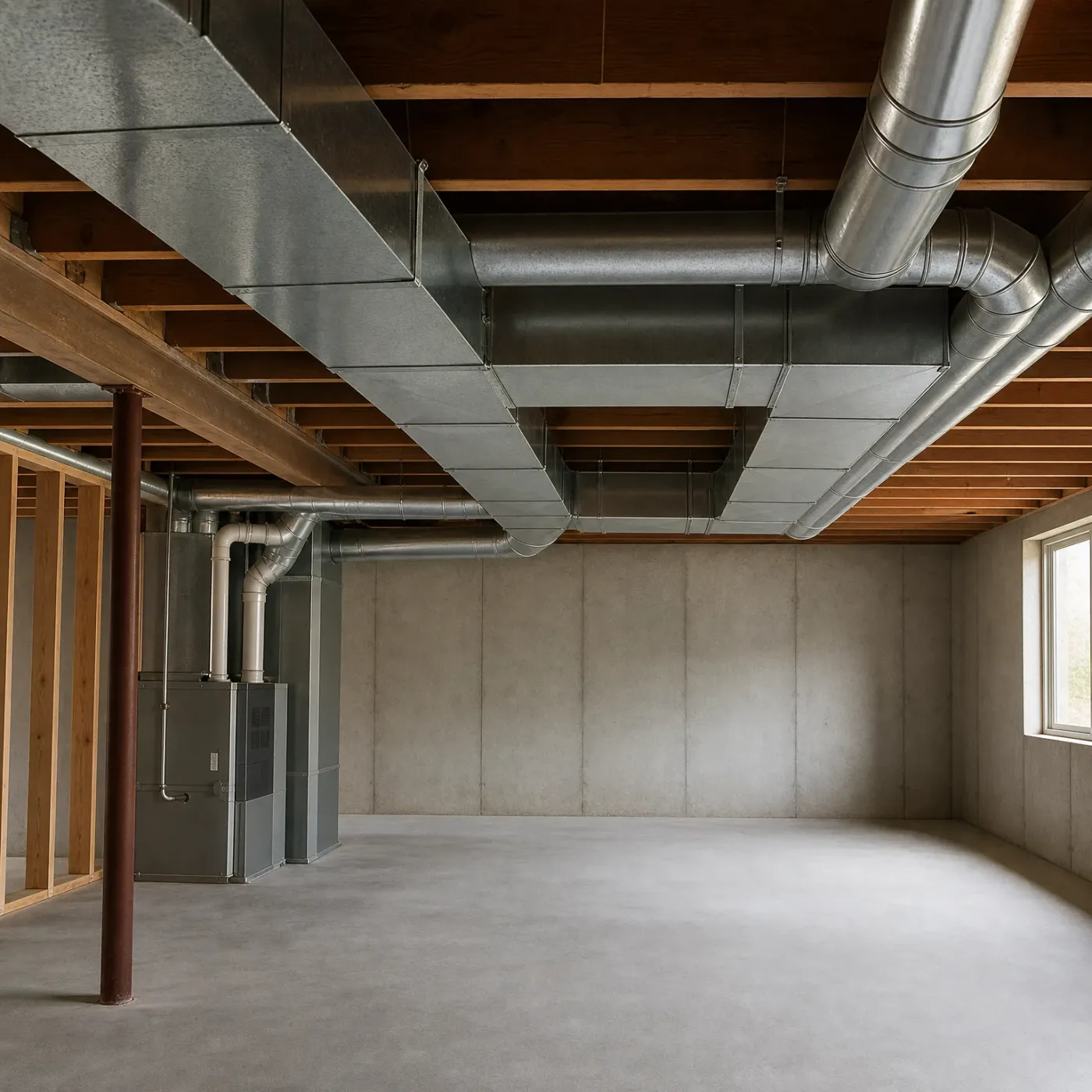
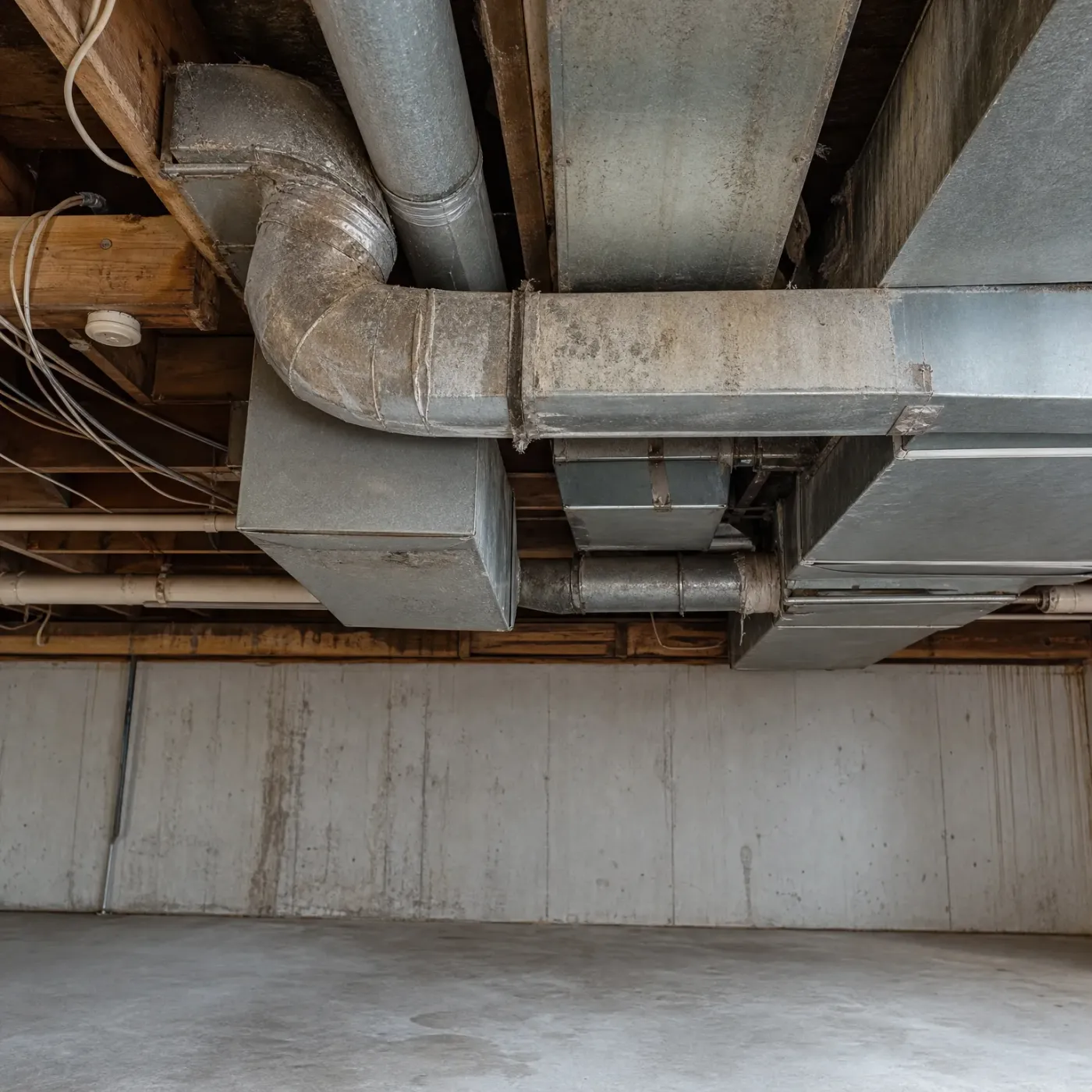
Metal trunk and spiral duct run clean along the joists, with no sign of dust buildup or damage at the furnace connections.
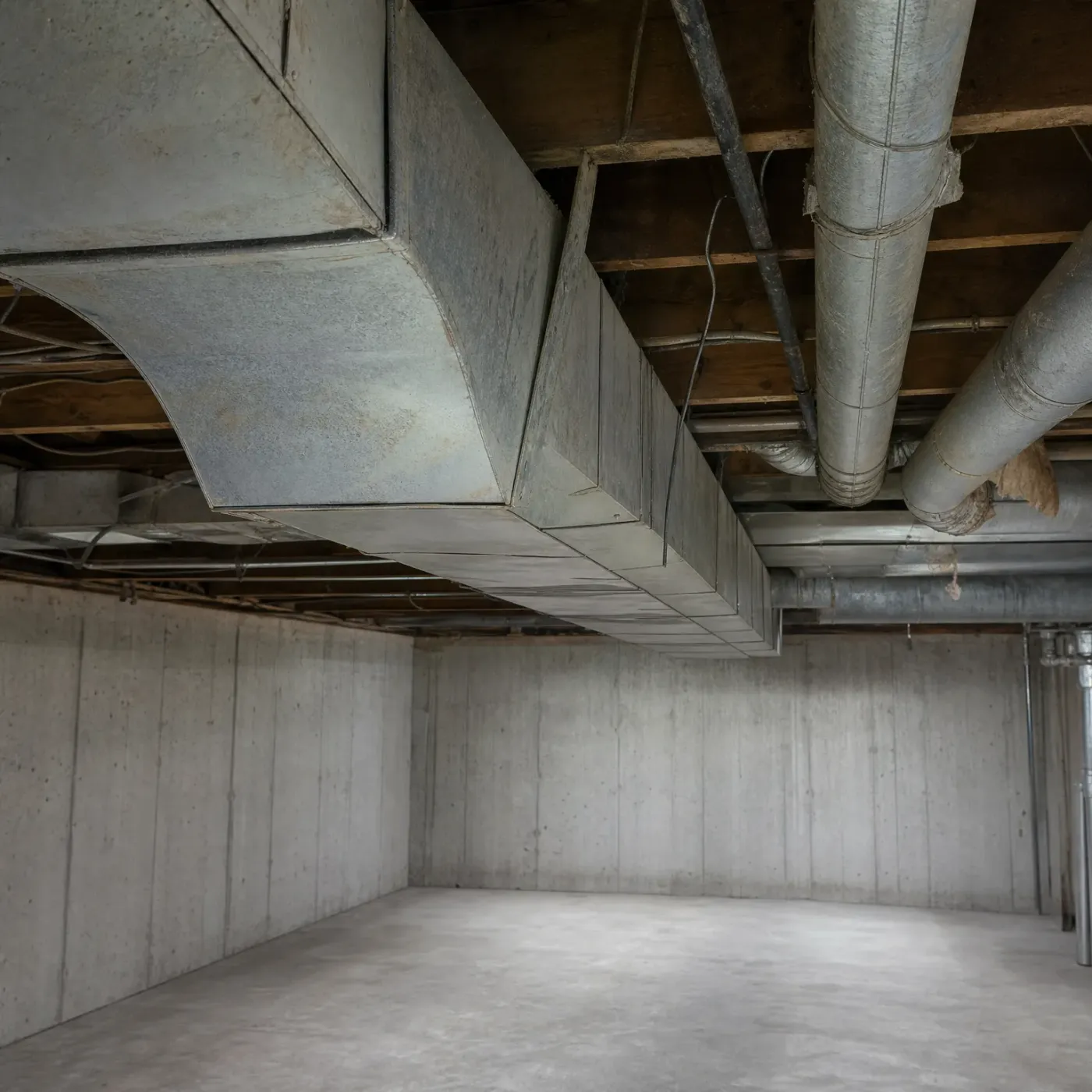
Flex duct and small pipes crowd the joists with no insulation wrap, the kind of setup that collects dust and loses air before it reaches the vent.
Do Your Ducts Need Cleaning or Not
Worth doing now
There's visible mold on the duct walls or the evaporator coil, not just dust sitting in the registers.
Rodents or insects have gotten into the ductwork, and you can see droppings or nesting material through the vents.
A water leak from the roof or a plumbing line has soaked the insulation around the ducts or inside the trunk line.
Someone in the house has allergies or breathing trouble that gets worse specifically when the furnace or AC kicks on.
A renovation left drywall dust or sawdust packed into the supply runs, enough that you can see it collecting at the registers.
Not worth it yet
The ducts just look dusty the way any duct looks after a few years, with no mold, pests, or water damage behind it.
Nobody in the house has new or worsening allergy symptoms tied to when the heat or air comes on.
The filter gets changed on schedule and still looks reasonably clean when it's pulled.
A cleaning crew showed up uninvited or called pushing a cleaning with no inspection of your actual ducts first.
The real issue is a leaky duct joint or a disconnected run losing air, a repair cleaning won't touch.
You've read what makes duct cleaning worth it here and what doesn't. If you're still turning it over, the next step is getting someone into your house who can look at the actual ducts and tell you, not guess from a phone call. That's a different thing than reading about mold or rodent signs on a page. A tech can run a camera through the trunk line, check the coil, and tell you whether what you're dealing with is worth cleaning or whether your money's better spent elsewhere. Tracking down a contractor for that, getting someone out to look, explaining the same thing to three different companies while you wait on quotes, that's the part that eats a weekend. Sending the request here means that legwork isn't yours to do anymore. Whatever's sitting in your ducts, dust from a 1979 build or something that got in after a leak, it's been there a while. Finding out doesn't have to take much more of your time.
How a dirty duct affects your air
Dust in a duct doesn't just sit there quietly. Every time the blower kicks on, air moving through the trunk line picks up loose dust and fiber and carries it straight to the registers. In a house where the ducts haven't been cleaned and there's a real source of contamination, like a rodent problem or standing water from a leak, that's what's landing in the bedrooms and living room. The duct itself doesn't make anyone sick just by being dusty. It's what's growing or nesting in there that matters, and that's the thing a cleaning actually removes.
Why the furnace runs longer than you'd think
Heat runs about seven months of the year in Tulsa County, which means the blower is moving air through that same duct system for most of the year. A return choked with dust makes the blower work harder to pull air through it, and a dirty coil on the AC side loses some of its ability to cool the air passing over it. Neither of those is solved by duct cleaning alone. A technician can tell you, looking at the actual duct and coil, whether what you're dealing with is a cleaning problem or something else in the system.
Before you get your ductwork cleaningAfter you get your ductwork cleaning
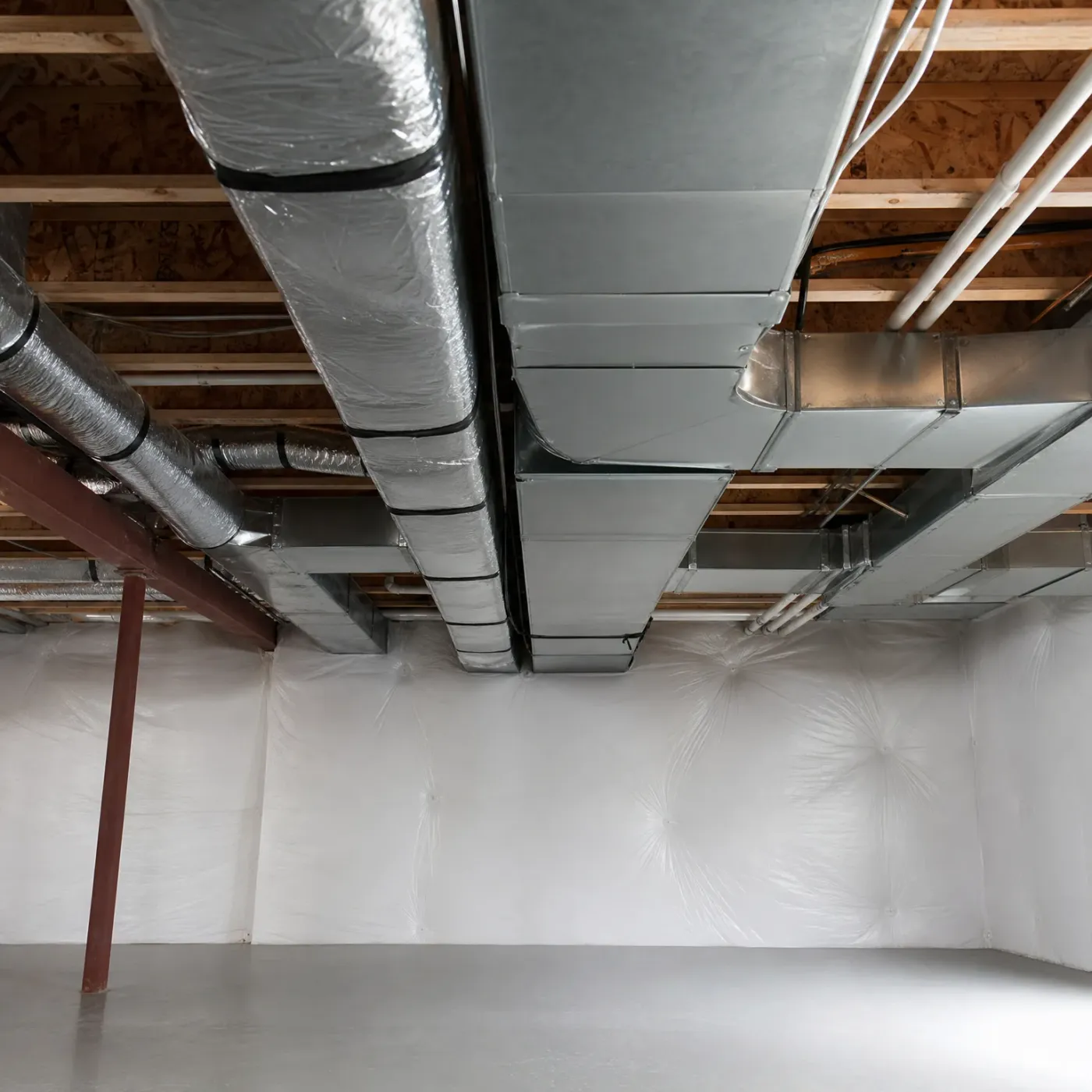
Ductwork that's doing fine
Rigid metal trunk and insulated flex run clean between the joists, connections sealed, no staining or sagging at the seams. Air moves through without picking up anything extra. A system like this doesn't need cleaning just because it's been a few years.
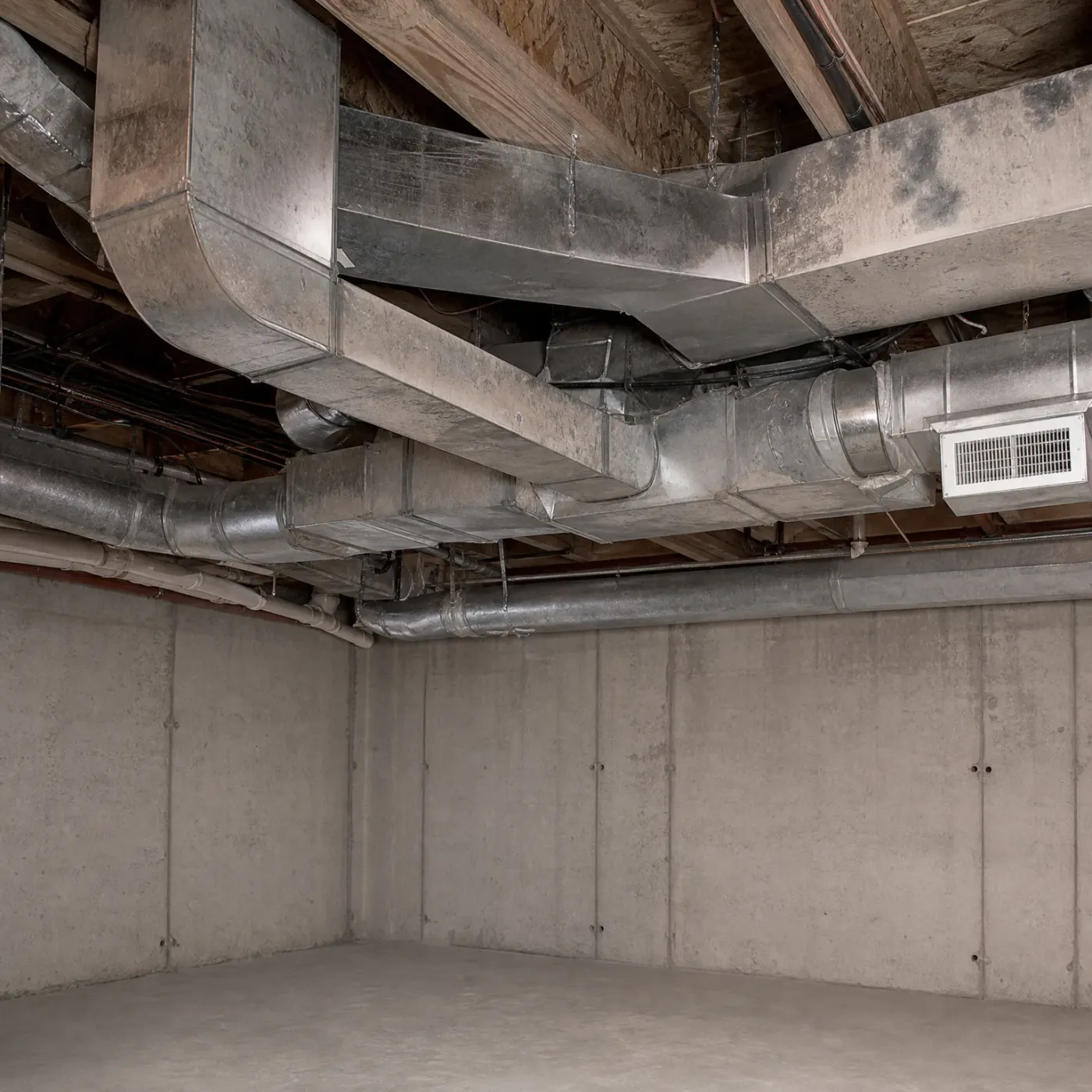
Ductwork with a problem
Exposed metal duct and a flex elbow run bare along a foundation wall, close to wiring and joists with no sign of recent attention. If that run has taken on moisture or pests from the crawl space, a cleaning only matters once someone's confirmed what's actually inside it.
Power here costs 13.96 cents per kilowatt-hour
At 13.96 cents a kilowatt-hour, your blower isn't the expensive part of the equation, the furnace and AC are. If dust is caked in the trunk line, both have to push harder and run longer to move the same air, and that shows up on the bill long before duct cleaning would.
EIA-861 2025
So is it worth it in your house
It comes down to what's actually in your ducts, not how many years it's been. Mold on the coil, rodents in the branch runs, dust thick enough to see at the register, those are reasons to clean. A duct system that's just old, with no sign of any of that, usually isn't.
If you've gotten this far and you're still not sure which side of that line your house falls on, that's a reasonable place to land. The part you don't have to do alone is figuring out who to call. Instead of searching through listings, phoning a few companies, explaining the same thing about your ducts three times over, and trying to compare quotes that don't even cover the same work, you can send one form and let someone who actually looks at ducts for a living tell you what's really going on in yours.
Ductwork Cleaning
Stop chasing a duct system pro
Get matched with a pro who works on ducts in Tulsa County.
Your request goes to a Tulsa County pro who takes ductwork jobs.
Send the form and finding a duct cleaner is handled.
One request and the duct cleaning stops waiting on you.
Skip searching for a duct system pro and answer a few questions instead.
One form replaces the calls you'd make to find a duct system pro.
The pro who gets in touch is licensed in Oklahoma and works in Tulsa County.
A licensed pro who works in Tulsa County gets your request.