A local pro who cleans ducts gets in touch with you.
Most homes in Oklahoma do fine getting their ducts cleaned every three to five years. That's the general rule. But your house doesn't run on a general rule, it runs on what's actually been pulled through those ducts since the last time anyone looked.
Summers here get sticky, and a system that runs hard against that humidity all season moves a lot of air. Moving a lot of air means moving a lot of whatever is riding in it. If your house has pets, or anyone smokes inside, or there's been a remodel with drywall dust in the air, your ducts are working on a shorter clock than the house next door.
Gas furnaces, which most homes here run, don't change that math much on their own. But a furnace that's short-cycling or a filter that's been forgotten for a few months too long will push more into the ductwork than a system running clean. Worth checking when you last swapped the filter before you worry about the ducts themselves.
You don't have to figure out where your house falls on that range by guessing. A contractor who's actually in your attic or crawlspace can look at the buildup and tell you whether you're due now or have another year or two. That's a different answer for a house with a new system than one running on ducts that came with the place, and it's not something to pin down from a search bar.
Send in what you're seeing, and a contractor who handles duct cleaning in your area will get in touch to look at your specific setup. No guesswork on your end about which end of that three-to-five-year window you're sitting on. Once it's sent, that part is off your plate.
How often should I get my air ducts cleaned in Oklahoma?
You want a number you can plan around, not a vague range. Every house pulls dust and debris into its ducts at a different rate, depending on what's going on inside and around it, so the answer depends on a few things about your own home before it settles on a schedule that actually fits.
Every three to five years, sooner if you have pets, a recent renovation, or allergies in the house
Three to five years works for most houses because that's roughly how long it takes normal household dust to build up enough inside the ducts to affect airflow and the air you're breathing. Pets shed hair and dander that gets pulled into the return vents faster than dust alone. A renovation or remodel throws drywall dust and debris into the system that a filter alone won't catch. And if anyone in the house has allergies or asthma, shorter gaps between cleanings keep less of that buildup circulating. Oklahoma's muggy summers add moisture to the mix, which gives dust more reason to cling to duct walls instead of blowing through. If none of that applies, five years is a reasonable stretch before it's worth a look.
Ducts running clean
Air moves through the sheet metal without pulling along a layer of dust. The register covers stay pale inside instead of gray. Nobody in the house is sneezing more at home than anywhere else. If your filter still looks close to new a few weeks after you swap it, the ducts behind it are likely keeping pace.
Ducts overdue
Dust sits in a visible film along the inside of the metal and drops out onto the floor below the joints. The filter turns gray fast, sometimes inside a week. A musty smell comes through the vents when the system first kicks on. That buildup is what a cleaning crew is there to pull out.
Oklahoma's red dirt doesn't stay outside. It rides in on shoes, through open windows during those mild stretches in April and October, and settles into ductwork faster than it does in places without that fine, dry dust blowing around.
That's why homes here often land on the shorter end of the three to five year range instead of the longer one. The dust that gets in has to go somewhere, and most of it ends up pulled through the same ducts, every day, for years.
Get your ductwork to the right pro
One request and the duct cleaning stops waiting on you.
Your duct cleaning request goes to a local pro who does this work.
No charge to send it. You decide if you hire them.
Is this why your house has been dustier lately?
You dust the shelves on a Saturday and by the following weekend there's another film on them. The return vent cover has gone gray instead of staying the color it was painted. Someone in the house is stuffed up at home but fine at work or school. You run the AC all summer and the house never quite smells clean, more like a closed-up room even with the windows shut. If the filter looks dirty again only a few weeks after you changed it, the ducts are likely feeding that dust right back into the air every time the system runs. Left alone, it's more sneezing and a system working harder than it needs to.
It's a mild spring afternoon and the living room gets good light from the window. You're on the couch with the TV on low, and the sun cuts across the ceiling just right so you notice the vent grille overhead. It's gone gray around the slats where it used to be white. You look down at the side table and the lamp base has that same fine film on it, the kind that comes back a day after you wipe it. The dirt from outside has been mild and dry for weeks now, windows open more than usual. You run a finger along the vent cover and it comes away dark. You hadn't planned on thinking about the ducts today.
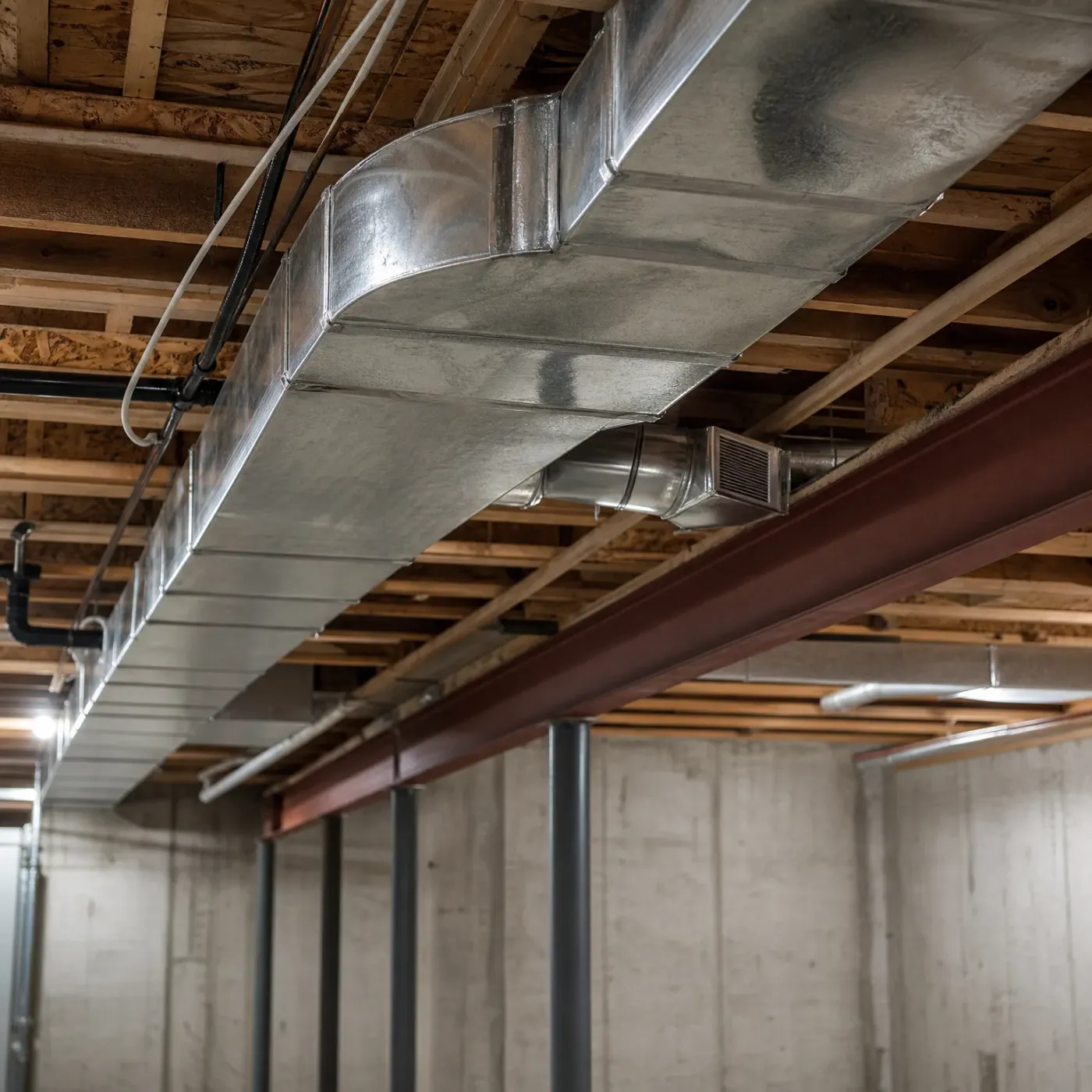
Steel ducts and flex runs cross the joists clean, with insulation doing its job at the walls and nothing hanging off the metal.
Ducts crowded in next to the PEX lines pick up dust where they pass close to the floor and the one light in the corner, out of sight and easy to put off.
Set Schedule or Watch for Signs
Clean on schedule
A three to five year cleaning keeps pace with what's settled in the ducts before it builds up enough to feed back into the air you breathe.
Sticking to a schedule means the work gets done before anyone in the house notices dust or a stuffy room, not after.
Gas furnaces push air through the same ducts all winter, so whatever collected over summer gets circulated before the next cleaning would catch it.
A system cleaned on a set interval is one less thing to track, since the next date is already decided instead of guessed at.
Cheap power here means running the blower or an air purifier between cleanings costs little, so a set schedule pairs well with keeping air moving.
Clean by condition
Watching for gray register covers, a dusty house day after day, or more sneezing at home than elsewhere catches a duct system that's dirtier than its age suggests.
Oklahoma's red dirt moves in on its own timeline, through open windows in spring and fall, so two houses on the same street can need cleaning at different points.
A house near new construction, with pets, or with someone who smokes fills its ducts faster than the three to five year average assumes.
Checking the filter and the vent covers costs nothing and tells you more about your own ducts than a general interval does.
Waiting for a sign means skipping a cleaning that isn't needed yet, but it also means missing one that's overdue if nobody happens to look.
Before you get your ductwork cleaningAfter you get your ductwork cleaning
Power costs 13.21 cents per kilowatt-hour statewide
A clogged, dusty duct system makes your furnace blower and AC fan push harder to move the same air, and at 13.21 cents per kilowatt-hour that extra strain shows up on your bill every month, not just once.
EIA-861 2025 statewide residential average
Three to five years is the number to plan around, and red dirt, a mild spring, or a sticky Oklahoma summer are the reasons to move sooner rather than later. Gray register covers, dust that comes back fast, a furnace working harder than it should, these are your house telling you it's time, whatever the calendar says. You don't have to figure out on your own whether now is the right time or who should do the work. Once you send the request, that part is off your plate. A contractor who handles duct cleaning in your area will reach out, and from there it's a conversation, not a research project. You already know your house better than any general rule does. Trust what you've seen in the vents and on the shelves, and let the next step be someone else's job for a change.
The right pro for this job
Send the form and the duct cleaning stops sitting on your list.