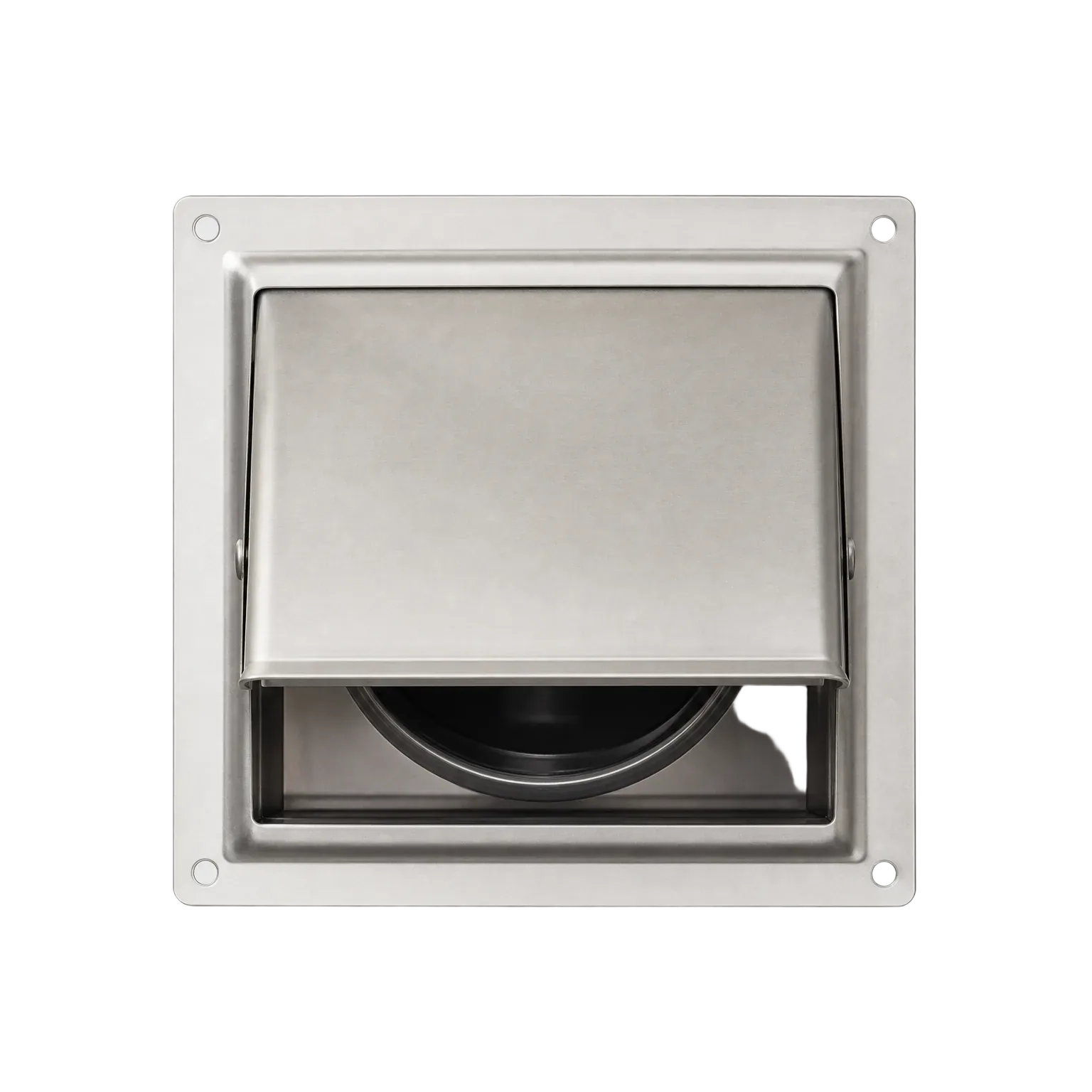
Yes, a clogged dryer vent is a real fire risk, and it's one of the more common causes of house fires tied to home appliances. Lint is the fuel. Every load of laundry sheds some, and if it can't travel all the way through the vent and out the hood, it builds up along the duct walls. That lint sits right next to a heat source, and if airflow is blocked enough, heat has nowhere to go but up. In Oklahoma City, dryers run hard and often, since laundry doesn't slow down for the long muggy summers or the cold winters here. A duct that's part blocked also makes the dryer work longer to dry each load, which means more heat and more lint moving through a vent that's already struggling. If you've noticed clothes taking longer to dry, or the outside vent hood barely moves air when the dryer runs, that's the vent telling you it's restricted.

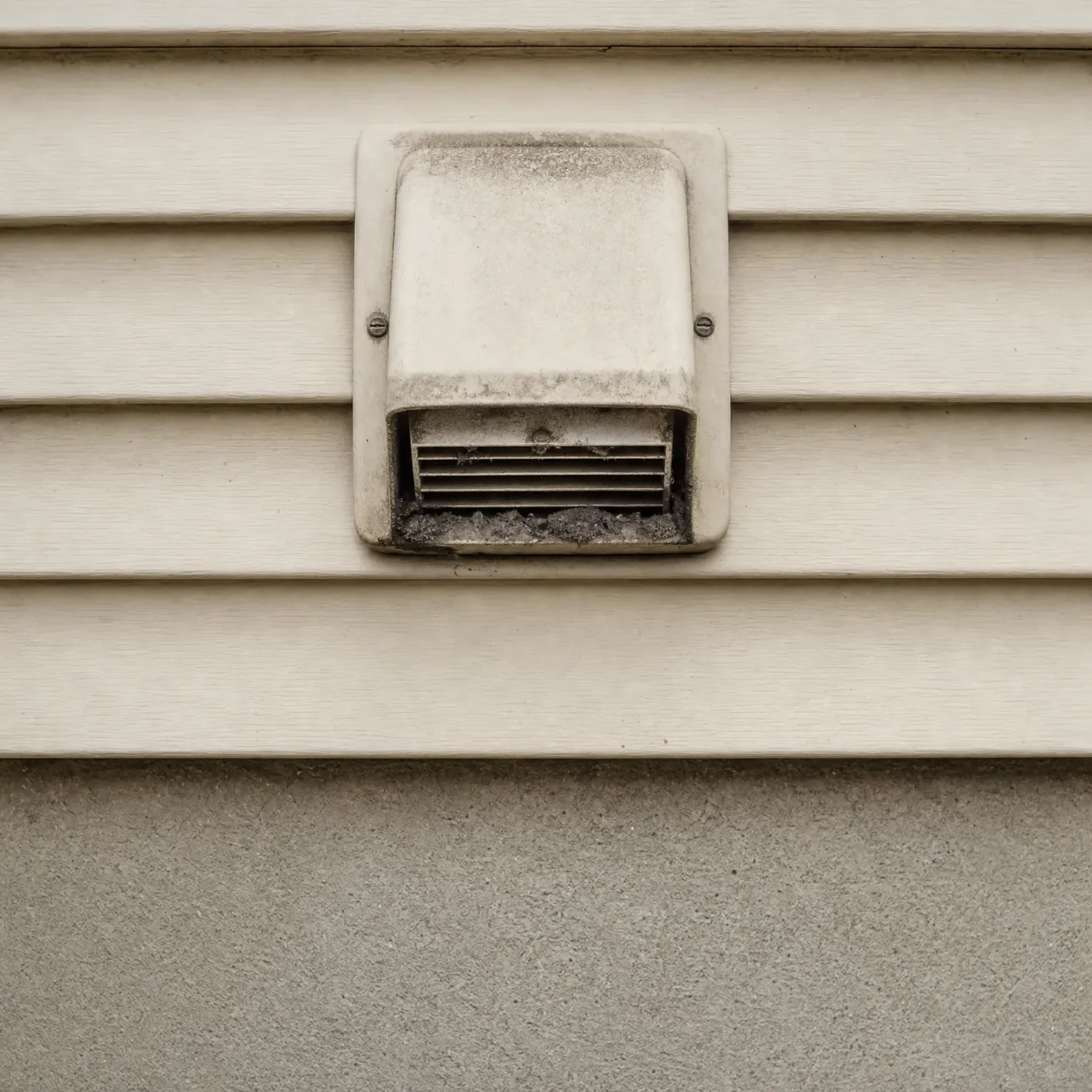
A dryer pushes hot, damp air through a duct and out a hood on the outside wall. The lint trap catches some of what a load sheds, not all of it, and the rest travels with that airflow. When the path narrows, the air can't carry that heat out fast enough, so it backs up into the duct and the drum. Gas dryers have more riding on this, since the burner depends on that same airflow to draw and vent its combustion gases properly. Vinyl and foil ducting make the problem worse over time because they sag at the folds and give lint somewhere to catch. Rigid metal duct holds its shape and handles heat better. You can often tell something's wrong before it gets dangerous. A load that used to dry in one cycle now takes two or three. The dryer runs hotter than it used to. The flap on the outside hood should swing open while the dryer runs and drop shut when it stops. If it stays shut, or stays propped open, air isn't moving the way it should.
How a Blocked Vent Starts a Fire
- Gas dryers add a second fuel source, since a restricted vent can affect how the burner draws and exhausts combustion gases.
- The lint trap only catches a portion of what a load sheds, and the rest rides the airway toward the vent hood.
- Heat that can't escape through a blocked vent builds up inside the drum and the duct run itself.
- A dryer running hotter than normal, or taking two or three cycles to dry a load, is often pushing exhaust against a partial blockage.
- Rigid metal duct resists heat better than vinyl or foil accordion duct, which can sag and trap lint at each fold.
- The vent hood flap should swing open when the dryer runs and fall shut when it's off, so a flap that stays shut or stays propped open both point to a problem.




Why the hood matters so much
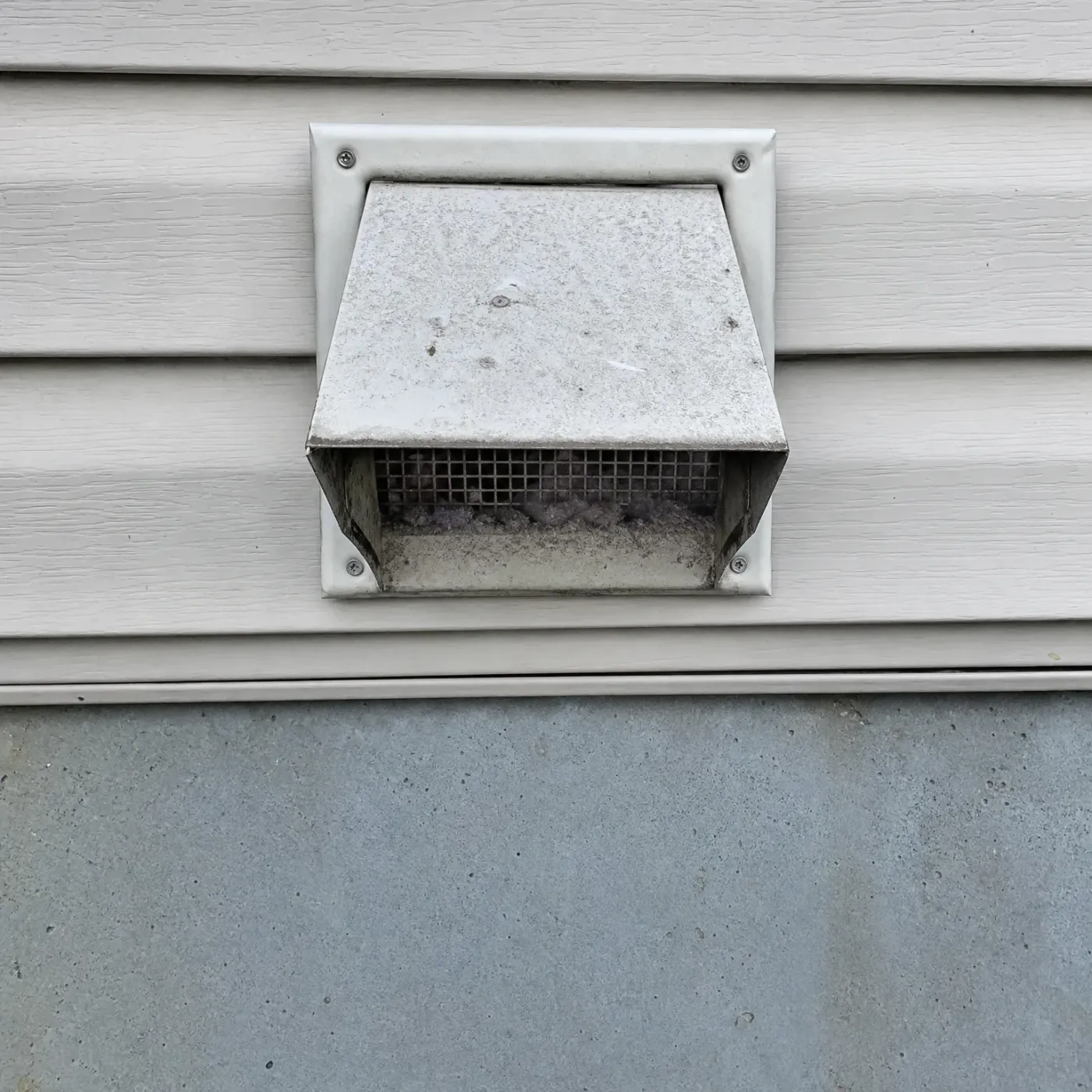
The vent hood sits on the outside wall, and its flap is supposed to swing open when the dryer runs and close when it's off. Lint collects right there first, caked around the louvers, because that's the narrowest point air has to pass through on its way out. A flap that won't open all the way, or louvers you can see matted with lint from outside, is a sign the vent is already restricted. Oklahoma City summers add their own load, since the humid air moving through a clogged vent carries that moisture back toward the duct instead of outside, and a damp, lint-packed vent holds heat longer than a clean one does.
What a long run adds up to
Houses where the dryer sits far from an outside wall need a longer vent run to reach the hood, and every extra foot plus every turn in that run gives lint more surface to catch on before it gets outside. A long, winding run clears slower and clogs faster than a short straight one. If your dryer backs up against an interior wall or the vent has to cross the attic to reach outside, that run is worth checking more than once a year. The louvers outside only tell you about the last few feet. They can't tell you what's built up further back.
Why does household size and age of your home matter here?
2.41 people per household on average
Households here run 2.41 people on average, which often means more loads a week and more lint moving through the same vent run.
Half the homes here were built by 1978
Half the homes in Oklahoma County were built in 1978 or earlier, old enough that the vent run may be longer or rougher than what's used today.
Power here costs 12.35 cents per kilowatt-hour
Electricity here runs 12.35 cents per kilowatt-hour, and a dryer fighting a clogged vent pulls more power to finish the same load.
ACS 2020-2024 · EIA-861 2025


2.41 people per household on average
With 2.41 people in the average household here, that's laundry piling up most days of the week, not once in a while. Every one of those loads sheds lint into the same vent run. More loads simply means buildup shows up sooner than you'd expect.
ACS 2020-2024

Get matched with a dryer vent pro in Oklahoma County
You've read what builds up in the vent and why it matters. What's left is deciding when to deal with it. Oklahoma City summers run long and muggy, which means the dryer works harder and more often through those months, and every one of those extra loads adds to what's sitting in the vent run right now. Finding someone to clean it usually means calling around, explaining the same thing to two or three companies, and sorting through quotes before you even get someone on the schedule. Handing that off means one contractor who serves this area gets your request and reaches out to you, so you're not the one chasing it down. Your dryer still has to run every week either way. The question is just whether the vent behind it is clear or working against it.
What This Comes Down To
- A clogged dryer vent is a real fire risk, built up from lint that a restricted vent traps instead of pushing outside.
- Gas dryers carry the added risk of a restricted vent affecting how the burner draws and exhausts combustion gases.
- The vent hood outside is where lint collects first, caked around the louvers, narrowing the path air needs to escape.
- With 2.41 people in the average Oklahoma County household, laundry runs often enough that buildup shows up sooner than most expect.
- Homes built in 1978 or earlier, half of those in the county, often carry vent runs that have had decades to accumulate lint.
- A professional cleaning clears the full run, from the lint trap housing to the vent hood, not just what's visible.
A clogged dryer vent is a fire risk because lint is fuel, and a restricted vent gives it a place to sit and build instead of moving outside. That's true whether the dryer is gas or electric, though a gas dryer carries the added concern of how a restricted vent affects the burner's draw. The vent hood outside is usually where it starts, caked around the louvers until the path out narrows. In a county where the average household runs 2.41 people, laundry doesn't let up, and buildup shows up sooner than most expect. In a house built in 1978 or earlier, which describes half the homes around Oklahoma City, that vent run has had decades to collect lint nobody's seen.
None of that means panic over every load of laundry. It means the vent is worth checking, and worth clearing when it's due. Finding someone to do that is usually the part that drags. Looking up contractors, calling a few, explaining the same thing about your dryer and your vent run to each one, then sitting with quotes trying to compare apples to apples. That's the part that goes away here. What's left is a straightforward answer to the question you came with: yes, it's a real risk, it's a known cause of house fires, and a full cleaning from the lint trap housing to the vent hood is what clears it.

Dryer Vent Cleaning
Find a dryer vent cleaning pro in Oklahoma County

- Get matched with someone who does this kind of work in Oklahoma County.
- Your dryer vent cleaning request goes to a local pro who does this work.

- Once you send the form, finding a pro is off your list.
- After you send the request, you're done searching.

- One form replaces the calls you'd make to find a dryer vent pro.
- Skip calling around for someone who cleans dryer vents.

- The pro who gets in touch is licensed in Oklahoma and works in Oklahoma County.
- A licensed pro who works in Oklahoma County gets your request.