

Vent clear
Air pushes the hood flap open wide and you can feel a strong, steady stream of warm air against your hand. One cycle dries a full load. The flap swings shut again once the dryer stops.
Once you send the form, finding a pro is off your list.
Hand it offYour clothes come out hotter than usual, or it takes two cycles to get them dry, and you want to know if that means the vent is clogged. With summers here sticky and long, and gas dryers running most of the year in Cleveland County, a vent that's choking on lint doesn't just slow you down. It's worth knowing what to look for before it turns into something worse than a slow load of laundry.
A clogged vent blocks the moist air a dryer needs to push outside. The drum can't get rid of that air, so it recirculates heat back through your clothes instead of venting it out, and the cycle runs longer to finish the job. Watch for clothes still damp after a full cycle, a dryer that feels hot to the touch on the outside, a burning smell, or the vent hood outside your house barely moving its flap when the dryer runs. Lint showing up around the door seal or the laundry room smelling warm and stale are other signs. In Cleveland County, where gas dryers run most of the year, a blocked vent also means exhaust has nowhere to go, which makes this more than a laundry problem.
Air pushes the hood flap open wide and you can feel a strong, steady stream of warm air against your hand. One cycle dries a full load. The flap swings shut again once the dryer stops.

Lint has packed in around the flap until it barely lifts, and what air does escape feels weak or lukewarm. Clothes come out damp enough for a second cycle. Lint built up like this outside means more is likely packed in the duct behind it.
2.46 people per household on average
With 2.46 people per household here on average, most homes run a load most days, and every load pushes more lint through the same duct.
Half the homes here were built by 1990
Half the homes in Cleveland County were built in 1990 or earlier, and ductwork that old has had decades of lint to pack into its bends.
Power here costs 12.60 cents per kilowatt-hour
At 12.60 cents per kilowatt-hour, power here is cheap, but a dryer fighting a clogged vent still runs longer and still costs you for it.
ACS 2020-2024 · EIA-861 2025
The trap catches most of it, but not all. A fine layer keeps riding the airflow and sticking to the inside of the duct, especially at the joints and at the hood flap outside. Over enough loads that layer closes in on itself. It does not take a tear or a hole in the duct to cause a clog. A clean trap every load just means less lint leaves with the air. It does not mean none does.
A dryer is built to push hot, damp air out through the vent as it runs. When the duct narrows with lint, that air has nowhere to go, so it backs up into the drum and the heating element has to work against it. The motor keeps running the same, but the airflow it depends on is weaker. That is why a clogged vent shows up as longer dry times and hotter clothes before it shows up as anything else.
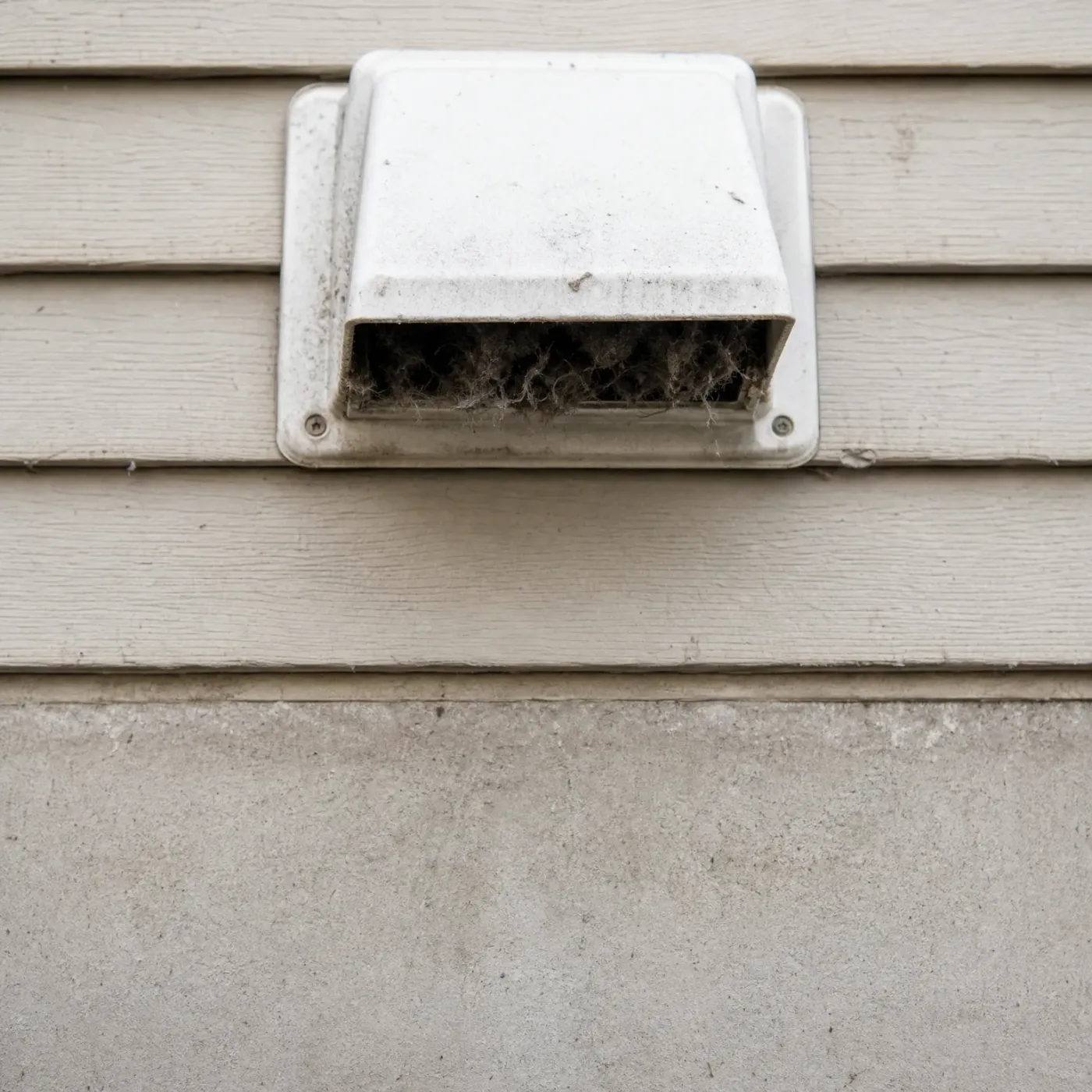
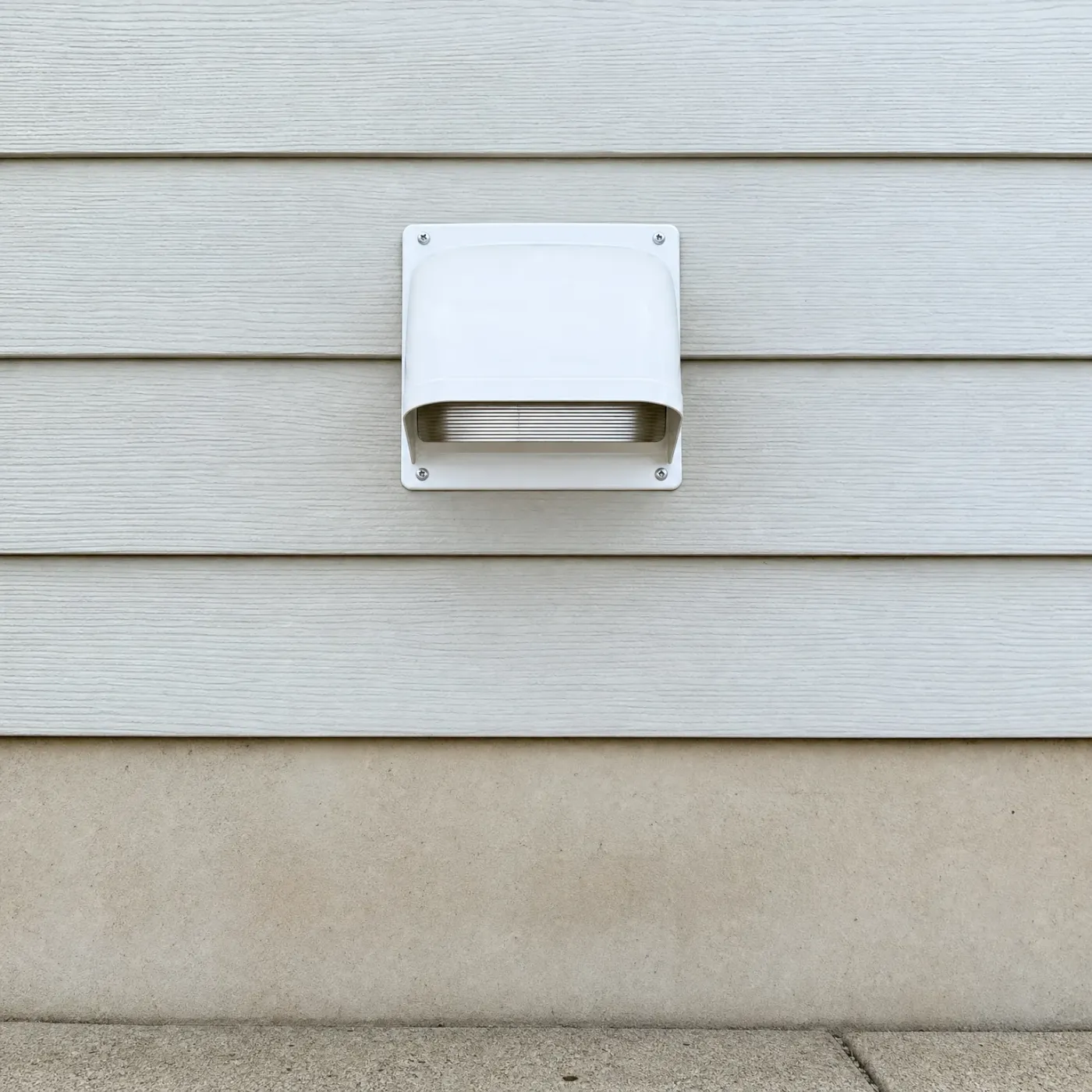
A dryer vent doesn't fail all at once. Lint builds at the joints and the elbow first, so the duct narrows gradually and the signs show up in a rough order. Longer dry times usually come first, before anything else is obvious, especially if your run goes through the attic or along an outside wall where heat escapes faster anyway. As the blockage grows, the motor and belt are pushing against more resistance with every cycle, and that extra work is what turns into a hot cabinet or a smell like something's burning. The hot, damp air has nowhere left to go, so some of it finds its way out around the door seal instead of out the hood where it belongs. Check the hood flap outside during a cycle. It should swing open with the airflow and fall shut when the dryer stops. If it barely moves, or stays shut, the clog is likely at the wall end of the vent, not back at the lint trap. The thermal fuse or the high limit switch is built to trip when exhaust backs up and heat has nowhere to go, so if your dryer suddenly won't start at all, that fuse is often the actual problem, not the motor. Replacing it without clearing the vent just means it trips again.




The pro who gets in touch is licensed in Oklahoma and works in Cleveland County.
Asking costs nothing, and the choice to hire stays yours.
A dryer fighting a blocked vent runs its heating element far longer than it should, and that heat has nowhere to go but back into the machine. The thermal fuse trips to protect it, and the dryer stops heating or stops running altogether. You end up replacing a part that was never the real problem. The drum bearing and belt wear faster too, since the motor keeps working through a full cycle that should have ended sooner. None of this shows up as a repair bill right away. It shows up as a dryer that quietly runs harder every single load until something inside finally gives out.
Lint is the most flammable material sitting in most homes, and a clogged vent is what lets it pile up against a heating element instead of blowing outside. That risk sits behind your dryer every time you run a load, not just on the days you notice the clothes coming out damp. There's a cost beyond the fire risk too. A dryer working against a blockage pulls power for longer than it needs to, cycle after cycle, for the same load of towels it used to dry in one pass. Power here is cheap, but paying for two cycles instead of one still adds up over a year of regular laundry.
At 2.46 people, most homes here run a load nearly every day. That's a steady stream of lint moving through the same few feet of duct, day after day, so the vent packs tight well before a year's worth of drying ever adds up.
ACS 2020-2024
You keep cleaning the lint trap every load and the dryer still runs long. The trap only ever caught the lint inside the drum, never the part already packed into the duct behind it.
A clean trap and a clogged vent look the same from where you stand in the laundry room. The only way to tell them apart is what the air does once it leaves the hood outside.


A dryer that runs hot, takes two cycles, or smells like something's burning is telling you the vent is packed, not the machine. That's the plain answer, and nothing about your house changes it. What changes is who you get to look at it. A duct cleaning in Norman runs the same few feet, through the same kind of wall and the same kind of hood flap, over and over, and a contractor who works this equipment all year in Cleveland County has already seen what's sitting in yours before they get there. You'll be matched with one licensed local contractor, not a handful of companies calling you back at once, so you're dealing with one person who knows the job and can speak to your vent specifically. Clear it out and the dryer goes back to drying a full load in one cycle, the way it used to. That's where you stand once the vent is clean.

Finding a pro stops being your job




