






A metal hooded dryer vent cover screwed to gray horizontal lap siding, with warm late-day light and leaf shadows across the wall and green shrubs at the lower right.

No calling every shop in Oklahoma County

Dryer taking too long to dry in Oklahoma City, OK

A dryer that runs two or three cycles to get clothes dry usually has a vent problem, not a machine problem. This page gets into what causes it and what it means for a gas dryer running lint-clogged in an Oklahoma City house. Skip the search for a vent cleaning company and the round of calls to compare quotes. This connects you with one licensed local contractor who clears vents for a living.

Skip calling around

A dryer that takes two or three cycles to finish is almost always a vent problem, not a worn-out machine. Lint builds up inside the duct until the moist air from your clothes can't get outside fast enough, so the dryer keeps running hot and wet air back through the drum. Most houses in Oklahoma City run gas dryers, and gas dryers push out more moisture per load than electric ones, which means a partly clogged vent shows up faster here as longer dry times. You may also notice the outside vent hood barely flaps when the dryer runs, or the laundry room feels warmer and more humid than it used to. Left alone, the clog gets worse, cycles get longer, and the dryer works harder to do the same job. It's also a fire risk, since lint trapped in a long or blocked vent run is what dryer fires feed on.

A smiling woman with long brown hair in a cream sweater sits at a stone counter with a glass of red wine, with a dimly lit living room, beamed ceiling and glass doors behind her.
A woman with shoulder-length dark wavy hair in a beige sweater laughs while looking off to the side, seated at a white marble counter with a glass of red wine, in a dimly lit home interior with a kitchen and sofa in the background.
A smiling woman with long dark hair in a black sweater sits at a white marble counter with a glass of red wine, in a dimly lit kitchen and living area with pendant lights, a potted plant, and flowers.
A smiling woman with long brown hair in a light knit sweater sits at a stone-topped counter with a glass of white wine, with a dimly lit living room, sofa, fireplace and round mirror behind her.

Why does your dryer vent clog up faster than you'd think?

  • 2.41 people per household on average

    With 2.41 people in the average household here, there's a load running most days, and every load pushes more lint toward the same narrow duct.

  • Half the homes here were built by 1978

    Half the homes in Oklahoma County went up by 1978, and the duct runs in a house that age weren't built with today's longer vent paths in mind.

  • Power here costs 12.35 cents per kilowatt-hour

    At 12.35 cents per kilowatt-hour, a dryer forcing hot air through a clogged vent for an extra cycle burns power you're paying for twice.

ACS 2020-2024 · EIA-861 2025

A white plastic hooded dryer vent with a louvered opening mounted on gray horizontal lap siding, beside a plain light-colored wall surface.

A clear vent, start to finish

Clean air moves straight down the duct and outside in a couple of minutes. A full load dries in one cycle because the moist air has somewhere to go. The dryer shuts off on schedule instead of running past the timer. You will notice the laundry room stays cooler, and the outside hood flap moves freely when the dryer kicks on, swinging open with the airflow instead of barely lifting.

A white hooded dryer vent cover screwed to beige horizontal lap siding on an exterior house wall, with a blank wall at left.

A duct packed with lint

Moist air backs up with nowhere to go, so the dryer runs again, then again. Clothes come out warm but not dry, and the drum keeps turning past the timer trying to finish the job. The outside hood barely moves when the dryer is running, a sign the air is fighting its way through packed lint instead of flowing out. Left alone, that buildup is also what feeds a dryer vent fire.

Is your dryer running long and the room staying warm and damp?

You load the dryer, run a full cycle, and pull out clothes that are still damp at the seams and in the pockets. You run it again. The top of the dryer feels warm, the laundry room holds a wet heat it didn't used to, and you can smell something close to burning dust when it's been running a while. Check the outside vent hood while a load is running. If the airflow is weak, or barely there, that's lint backed up in the duct, not a weak dryer. Left alone, a gas dryer forcing hot exhaust against a clog is a fire risk, and it's one of the most common ones in a house.

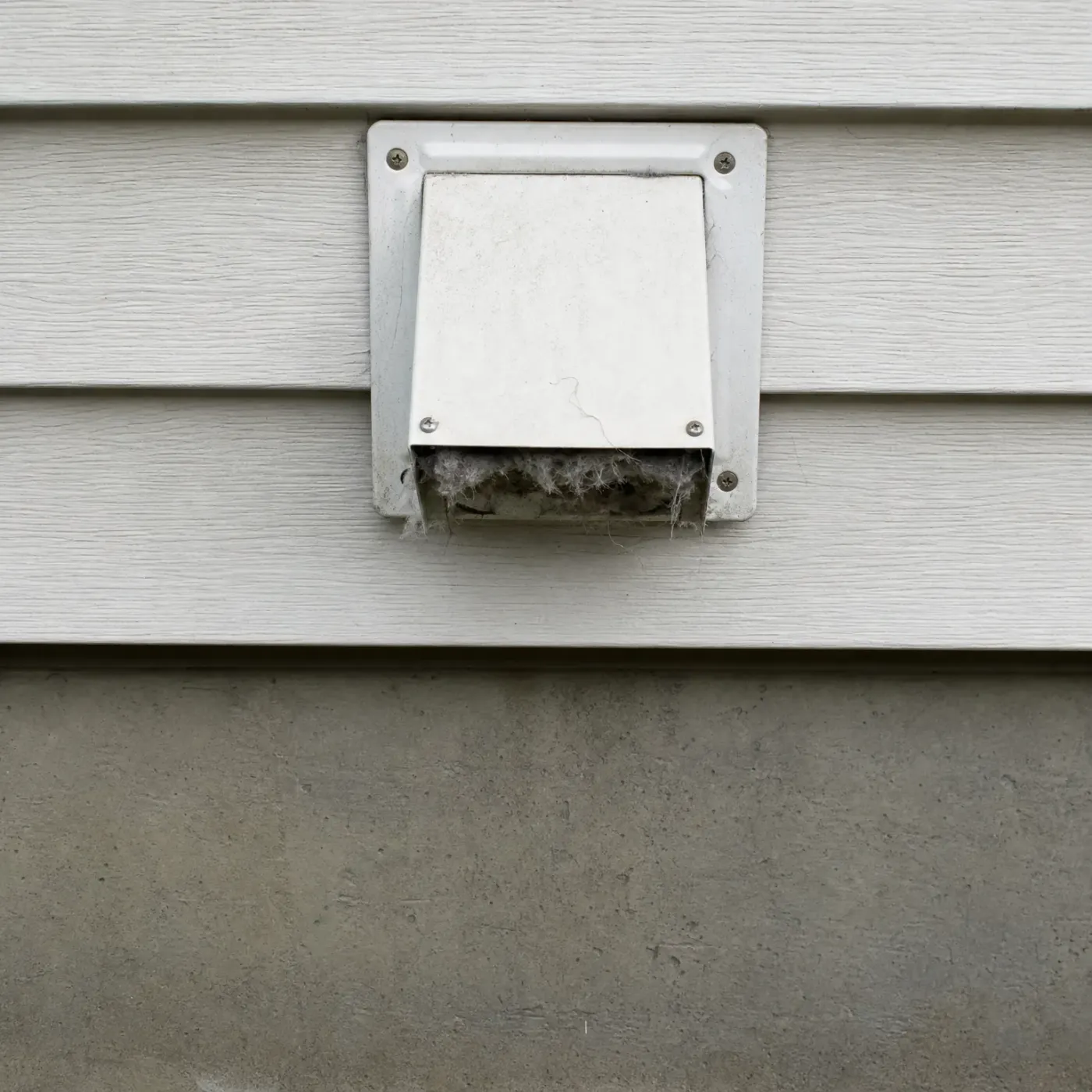
A white hooded dryer vent with a square mounting plate screwed onto light gray horizontal vinyl siding, above a gray stucco-textured lower wall.

Vent clear and open

This is what a clear vent cap looks like against the siding, hood sitting loose and square, flap free to swing with the airflow behind it. Air pushes it open every time the dryer runs and drops straight back closed when the cycle ends. Nothing is packed behind the brass screws holding it to the wall.
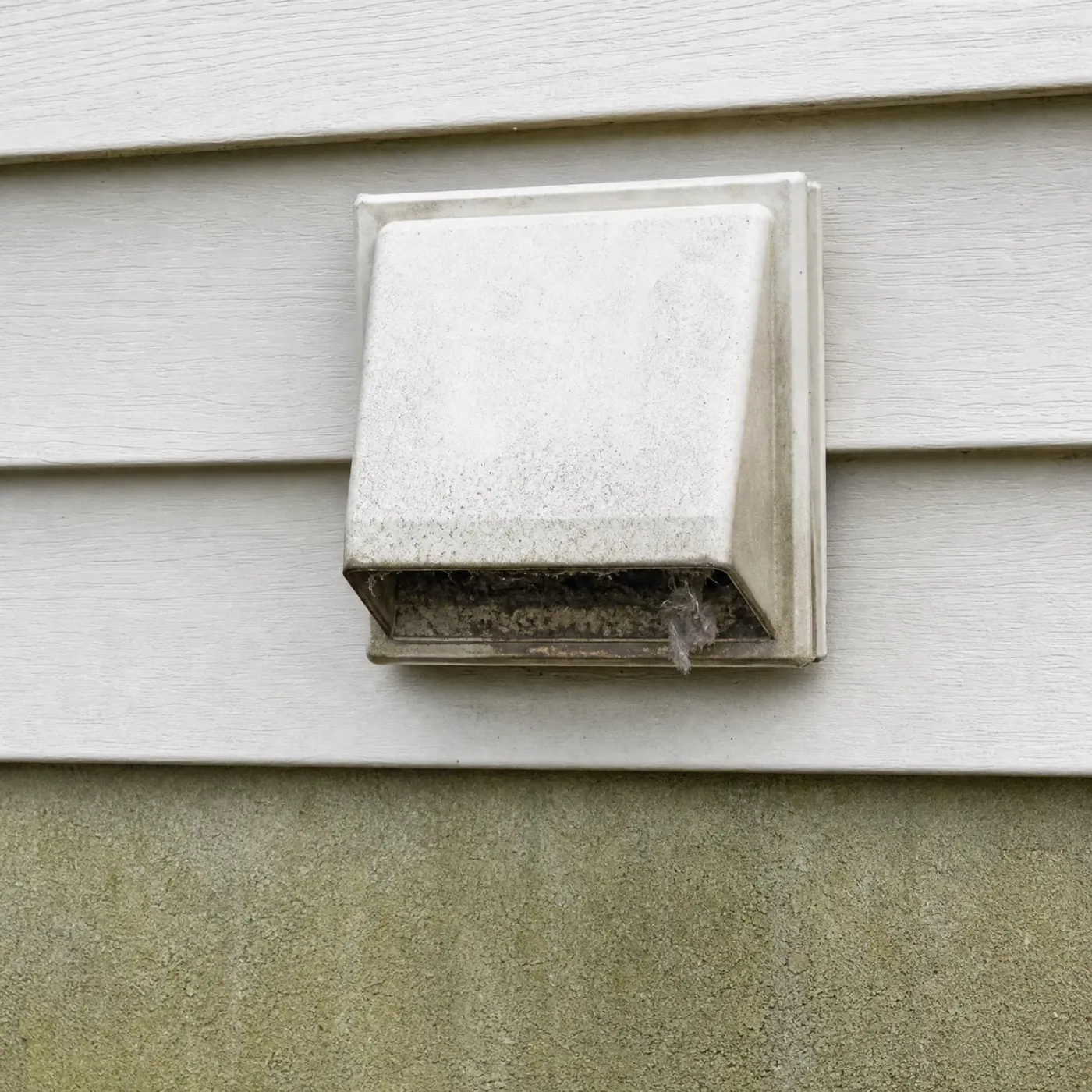

A white plastic dryer vent hood mounted on light-colored horizontal lap siding, with lint caught in its lower opening and a green-stained foundation wall below.

Vent packed with lint

Here the flap can't close because lint has built up behind it and started pushing out through the opening. Air that should be carrying moisture outside is backing up into the duct instead, and from there into your dryer. This is what's behind a load that finishes damp no matter how long you run it.

Clean the Vent or Replace the Dryer

Clean the vent

  • A licensed contractor runs a brush the full length of the duct and clears lint from the hood cap to the drum.
  • Most runs restore a single-cycle dry, since the airflow problem was the lint, not a worn part.
  • This is the fix when the dryer is newer or mid-life and has been running fine until the vent started dragging.
  • A clean vent also lowers the chance of the lint catching fire inside the duct, which is the real risk with a long clog.
  • If the duct run is long or has several turns, cleaning may need repeating sooner than a short, straight run would.

Replace the dryer

  • Worth weighing if the dryer is old and has other problems on top of the slow drying, like a failing heating element or a drum that won't turn right.
  • A new dryer still won't dry in one cycle if the vent stays clogged, so this doesn't solve a vent problem on its own.
  • Buying new is the bigger expense up front, with none of it recovered if the vent was the actual cause.
  • Installing a new unit means re-connecting it to the same duct, so whatever caused the clog the first time is still there.
  • Makes sense once a contractor has confirmed the vent is clear and the machine itself is what's failing.
A pile of beige, navy, and teal towels sits on top of a washer or dryer in a dim laundry room with a window and an upper cabinet.

It's almost nine on a Tuesday and the dryer is still going. You've already pulled the towels out once, felt the damp patches along the folds, and shoved them back in for another forty minutes. Now they're piled on top of the machine while you wait to see if this round finally does it. The laundry room is warmer than the hallway, the window's fogged at the bottom corner, and the air smells like hot cotton that never quite dried. You've got a Rolodex of names you keep meaning to call, read reviews on, get quotes from, and explain this same thing to three different times. Right now you just want the towels dry before bed.

Skip the calls to every shop

You could spend the next hour on this the way most people do. Search for a vent cleaning company, call the first one, explain that the dryer runs two cycles and the laundry room feels like a sauna, get put on hold, call the next one, explain it again, write down a price, call a third just to see if it's fair. By the time you've done that three or four times you've spent more effort finding help than the job itself will take. A contractor who works dryer vents in Oklahoma City and the rest of Oklahoma County all year, through the muggy stretch when loads run back to back and into the cold months when every vent cap fights ice and wind, has seen this exact pattern enough times to know what a lint-packed duct looks like before the brush even goes in. One request goes to one licensed local contractor, not five companies competing for your callback, so you explain it once and wait on one call instead of juggling several. The dryer is still sitting there running long. That part doesn't wait.

A standard dryer vent run is built to move a full load's worth of moist air outside in one cycle. Lint cuts that opening down to a fraction of its size.

That's why the drum keeps turning past the timer. The air has nowhere to go, so the moisture goes back over your clothes instead of out through the hood.

A white plastic dryer vent hood with a hinged flap mounted on light grey horizontal lap siding, with lint clogging the opening beneath the flap and a concrete foundation wall below.
Before you get your dryer vent cleaning
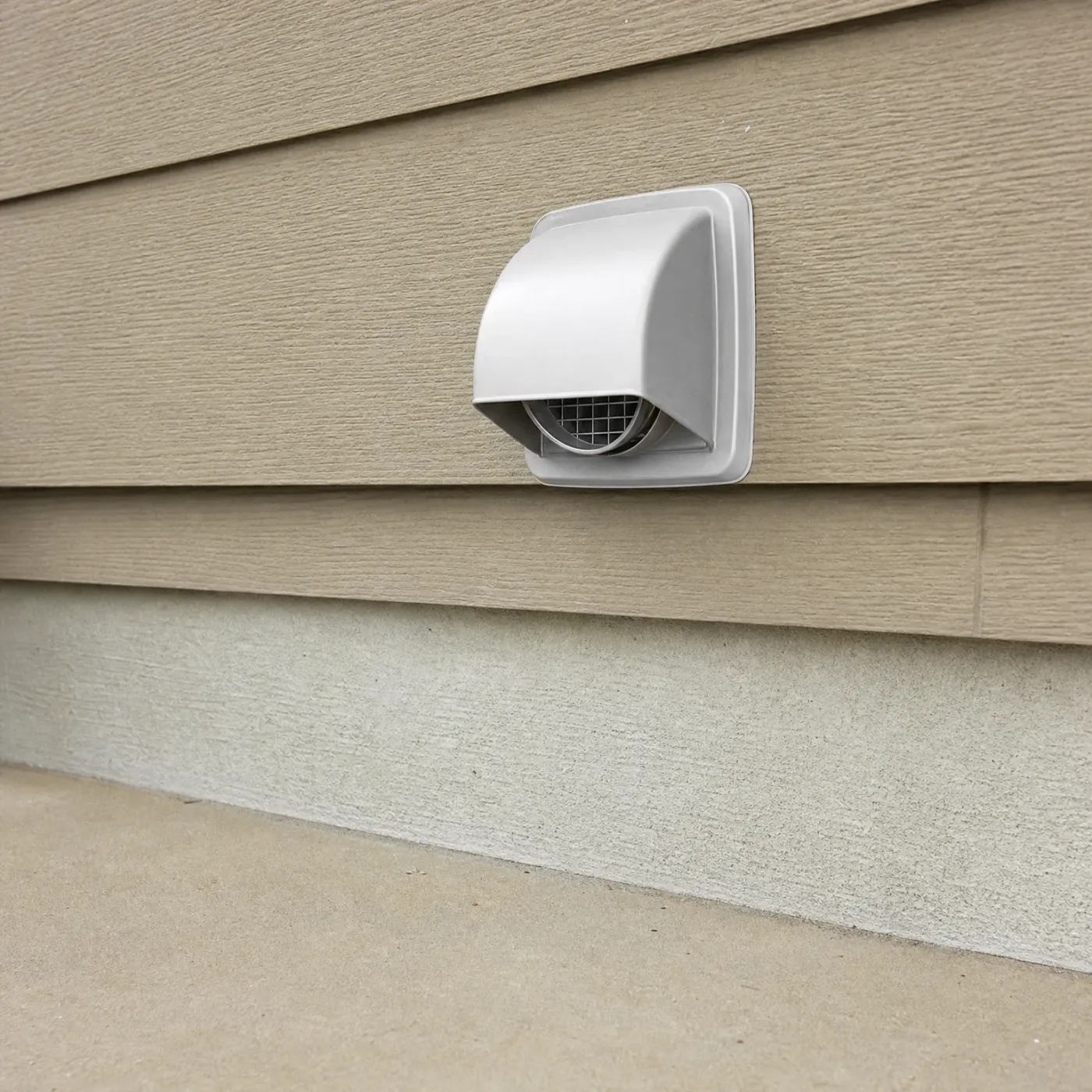
A white hooded dryer vent with a grille mounted on tan horizontal lap siding above a concrete slab.
After you get your dryer vent cleaning

Calling around on your own

You'd start a search, call a company, explain that the dryer runs two cycles and the laundry room stays damp, and wait to hear if they even do vent work. Then you call the next one and go through it again, because the first one quoted a price with no idea what they're walking into. Somewhere in there you're comparing two or three quotes that aren't quite for the same job, trying to guess which contractor actually knows ducts in Oklahoma City houses versus one who mostly does repairs and takes vent jobs when things are slow.

Matched with one contractor

You answer a few questions about the dryer and the vent, and a licensed local contractor who works on this equipment every season gets in touch, already knowing what two-cycle drying in an Oklahoma County house usually means. No flood of calls from companies competing for the job, no re-explaining the problem to a third person. Someone who's cleared plenty of lint-packed ducts before the first frost shows up knowing roughly what they'll find, and gets to clearing it instead of asking you to describe it again.

2.41 people per household on average

At 2.41 people, most houses here are running a load every day, not once a week. A vent that's already tight with lint has less room to recover between runs, so the long cycles tend to show up sooner rather than later.

ACS 2020-2024

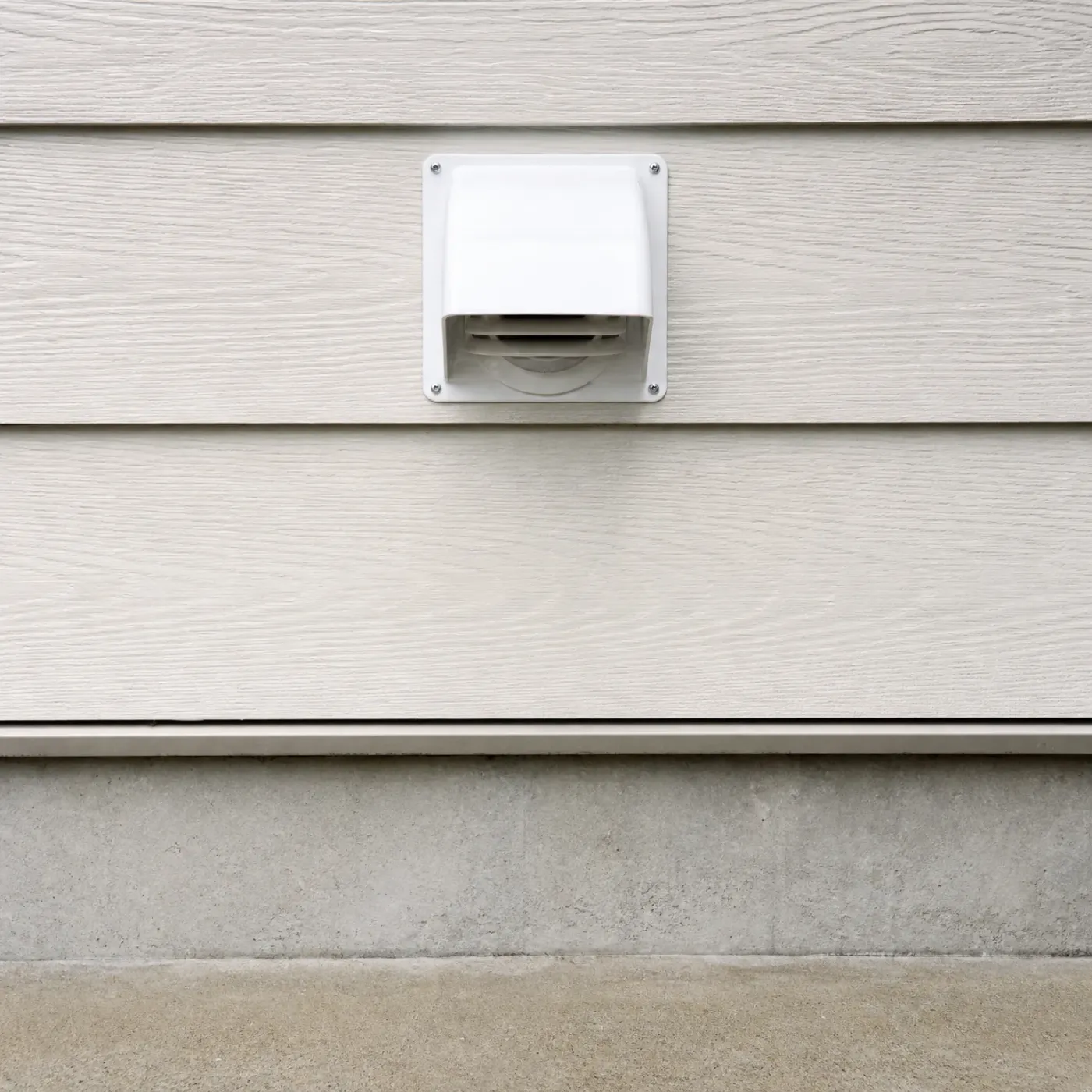
A white hooded dryer vent with a louvered flap mounted on beige horizontal lap siding above a concrete foundation wall.

The cap sitting right

This is what the vent should look like against the siding. The hood sits flush, the screws hold it flat at the corners, and the louvered flaps hang open and loose. Air from the dryer pushes them out every cycle and they drop shut when it's done.

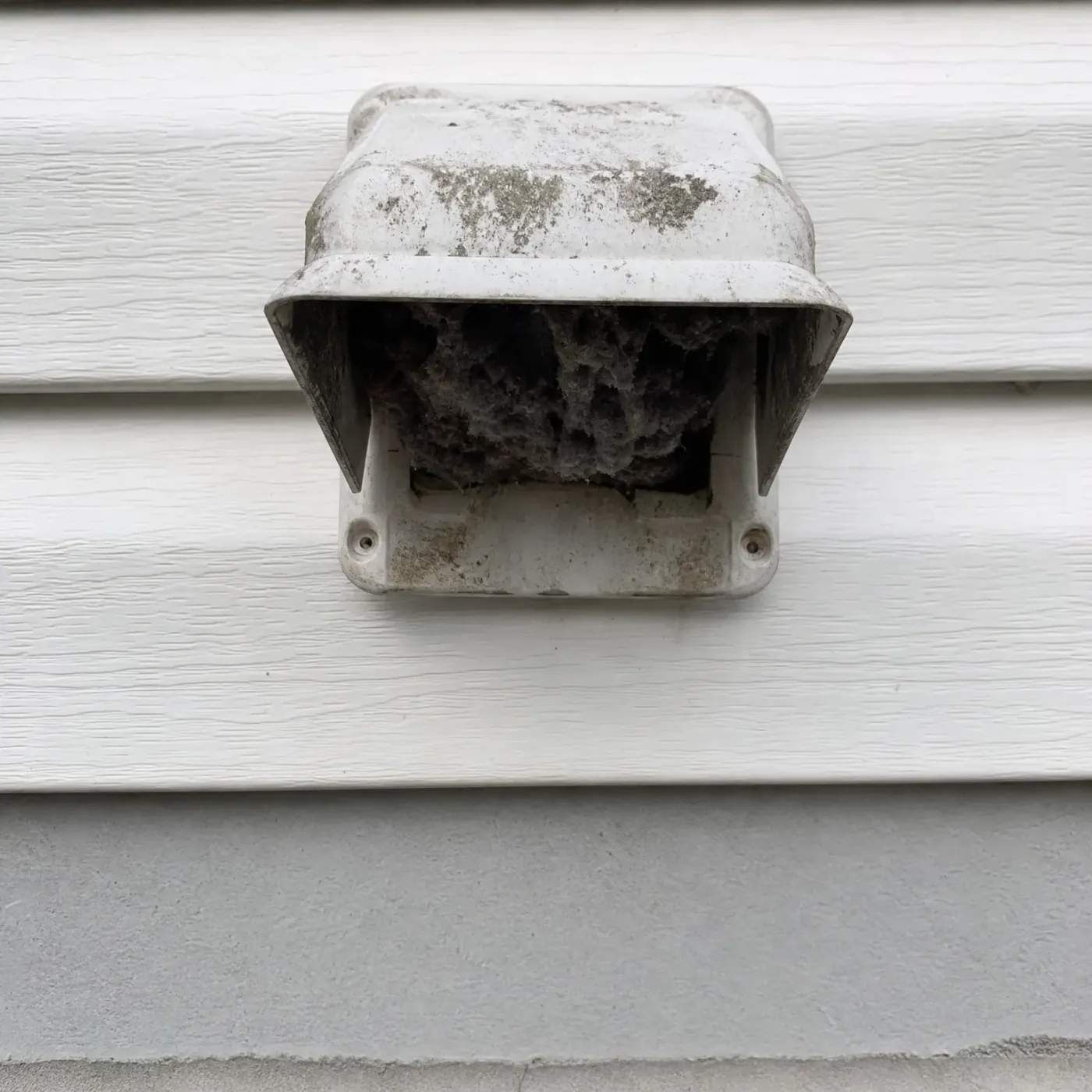
A white plastic dryer vent hood on horizontal lap siding, clogged with thick gray lint and dirt, above a lighter concrete foundation wall.

The cap packed with lint

Here the opening is choked with a solid mass of compacted lint, and the cap itself is streaked with dirt and mildew. The flaps can't swing because there's no room left to push them. Whatever air gets through is a fraction of what a full load needs to clear out.

A closed laptop and a ceramic mug on a wooden table in front of a kitchen with green cabinets, marble counter, black pot, cutting board, wooden bowl, and a white vase with greenery.

A one-cycle dry is the vent working the way it should

A dryer that finishes a full load in one cycle has a clear path outside. That's the whole answer. The lint that built up over months of daily loads is what turned one cycle into two or three, and clearing it out of the duct is what brings the time back down.

Finding someone to do that work is the part that eats your evening if you go at it alone. You'd be searching for a company that actually does vent cleaning, not just dryer repair, calling to ask, explaining the two-cycle problem and the damp laundry room all over again if they don't, then doing it again with the next name on the list. A local contractor who works on vents around Oklahoma County every week already knows what a clogged one looks like and what it takes to clear it, so you tell the story once and the job gets booked.

A light gray sofa with gray and beige textured throw pillows and a cream knit blanket beside a white-framed window, with a small round side table holding a ceramic vase and potted greenery.
A smiling man with curly graying hair and a dark knit sweater sits at a candlelit dinner table with a glass of red wine, a water glass and a bowl of salad in the foreground, in a dimly lit room with a lamp, framed picture and window behind him.
A woman in a cream knit sweater reclines on a gray sofa with her eyes closed and a slight smile, covered by a fleece blanket with a closed book on her lap, a lit table lamp and potted plants behind her.

Dryer Vent Cleaning

Skip calling around

A licensed pro who works in Oklahoma County gets your request.

A smartphone with a blank green screen stands upright against a plain light gray background.
Duct and vent cleaningOklahoma County, OK
Step 1 of 3

What kind of equipment?