

One blocked vent
A nest packed into the duct traps hot, wet air with nowhere to go. That heat sits against lint and wood framing behind your dryer, which is how vent fires start.
Get matched with someone who does this kind of work in Tulsa County.
Get matchedA bird in your dryer vent is usually a house sparrow or a starling that got in through the flap and built a nest in the duct between the wall and the outside hood. It happens most in spring, when birds are looking for a tight, sheltered spot to nest, and a vent flap that hangs loose or sticks open gives them an easy way in. Once the nest is in there, lint and dryer heat make it worse. The nest blocks airflow, so your dryer takes longer to dry a load and runs hotter than it should, and that buildup of lint around a nest is a real fire risk. You may notice chirping near the vent, a burning smell, or clothes coming out damp after a full cycle. The fix is getting the vent cleared out and the hood checked so it closes properly and keeps the next bird out.

The outside hood has a flap that is supposed to swing shut when the dryer isn't running. Nest material wedges under it, props it open, and that's what let the bird in to begin with. Once it's propped open even a little, rain gets in too, and so does the next bird looking for the same spot. A flap that won't sit flush against the hood is usually the first sign something is built up inside.

Dryer vents carry warm, damp air out of the house, and lint collects along the way even without a nest in the duct. Add sticks and grass to that lint and the duct narrows fast. A dryer working against a blocked vent runs hotter and takes longer to dry a load, and in Tulsa's humid summers that extra moisture has nowhere to go but back into the duct, which only helps whatever is nesting in there.
2.46 people per household on average
Most Tulsa County households run 2.46 people, which means loads most days of the week. A flap that opens and closes that often wears sooner and gives a bird its opening.
Half the homes here were built by 1979
Half the homes in Tulsa County were built in 1979 or earlier. A hood and flap that old have likely been replaced or bent at least once, and a worn flap doesn't seal shut.
Power here costs 13.96 cents per kilowatt-hour
Power here runs 13.96 cents per kilowatt-hour. A nest blocking the duct makes the dryer run longer to dry the same load, and that shows up on the bill.
ACS 2020-2024 · EIA-861 2025
Clean the vent out now and the dryer goes back to drying a load in one cycle instead of two or three, and the fire risk that comes with a blocked vent goes away with it.
Leave the nest in place and the dryer keeps pushing hot, damp air against a blockage instead of outside, so lint collects faster and the heat has nowhere to go but back into the duct.




A nest packed into the duct traps hot, wet air with nowhere to go. That heat sits against lint and wood framing behind your dryer, which is how vent fires start.
Once the duct and hood are clear, the flap can swing shut again on its own, drying stays quick, and nothing is nesting in there waiting for next spring.
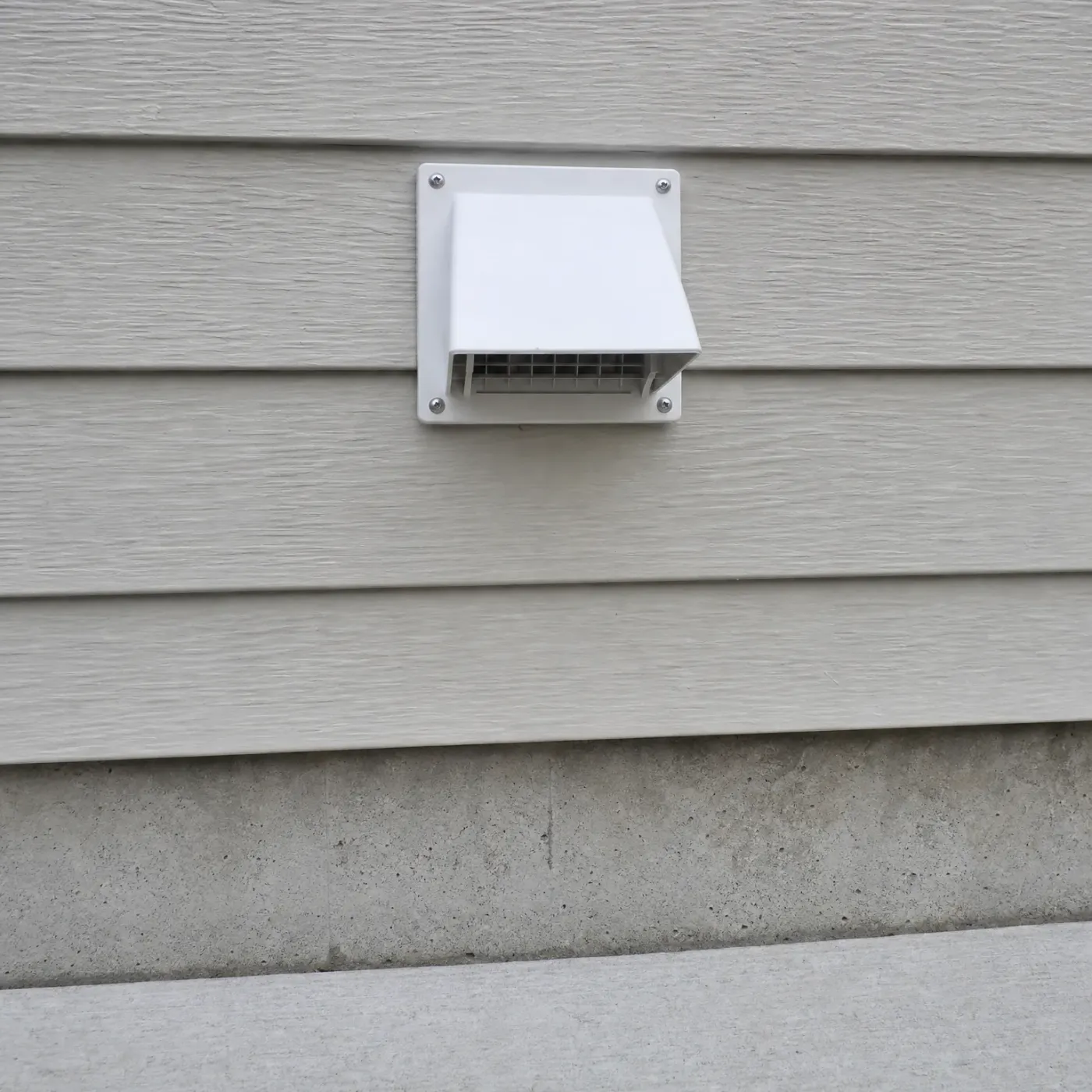
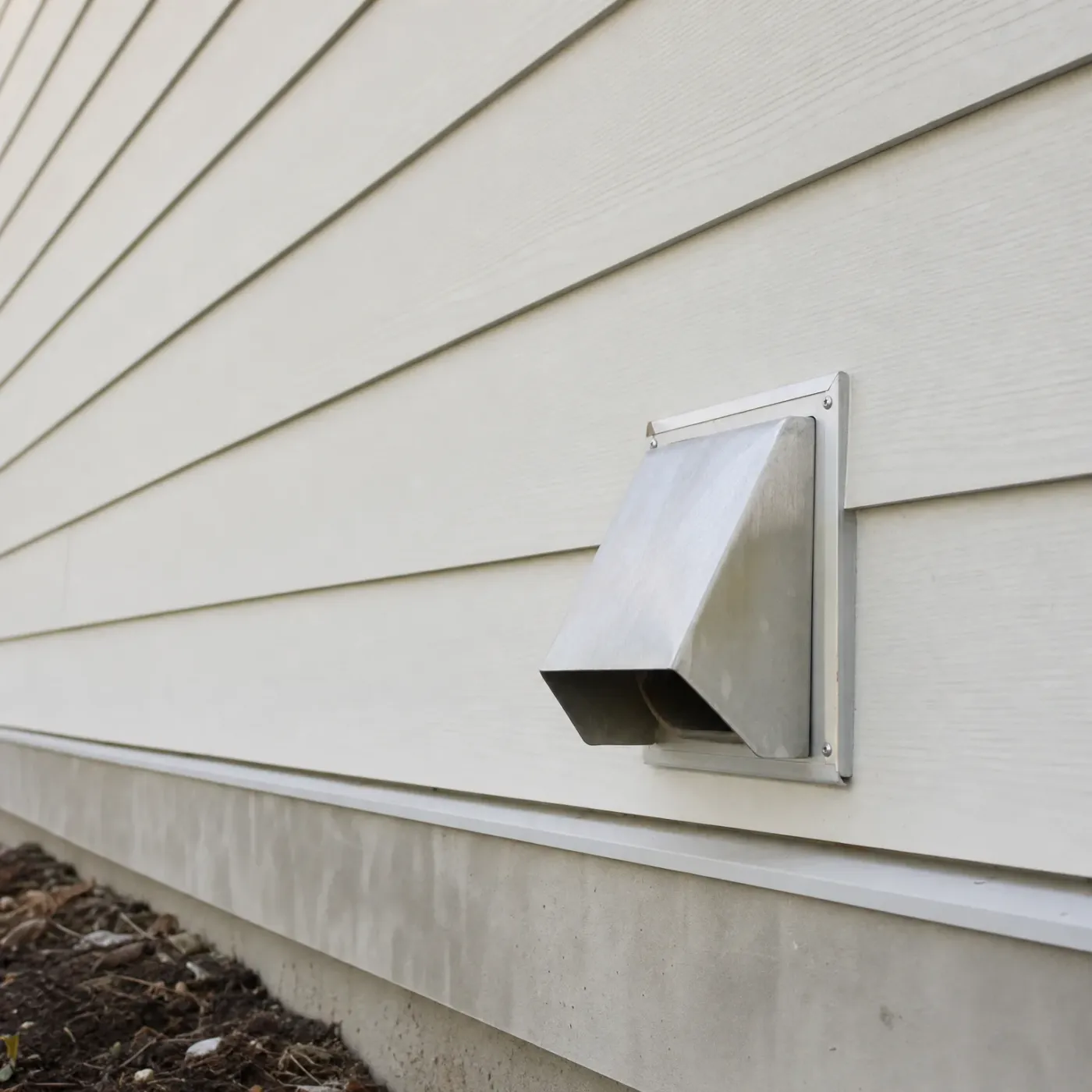
The hood sits flush against the siding, flap closed, screws tight at all four corners. Air from the dryer pushes the flap open on its way out and it falls shut again after. Nothing nests here because there's no gap to get into.
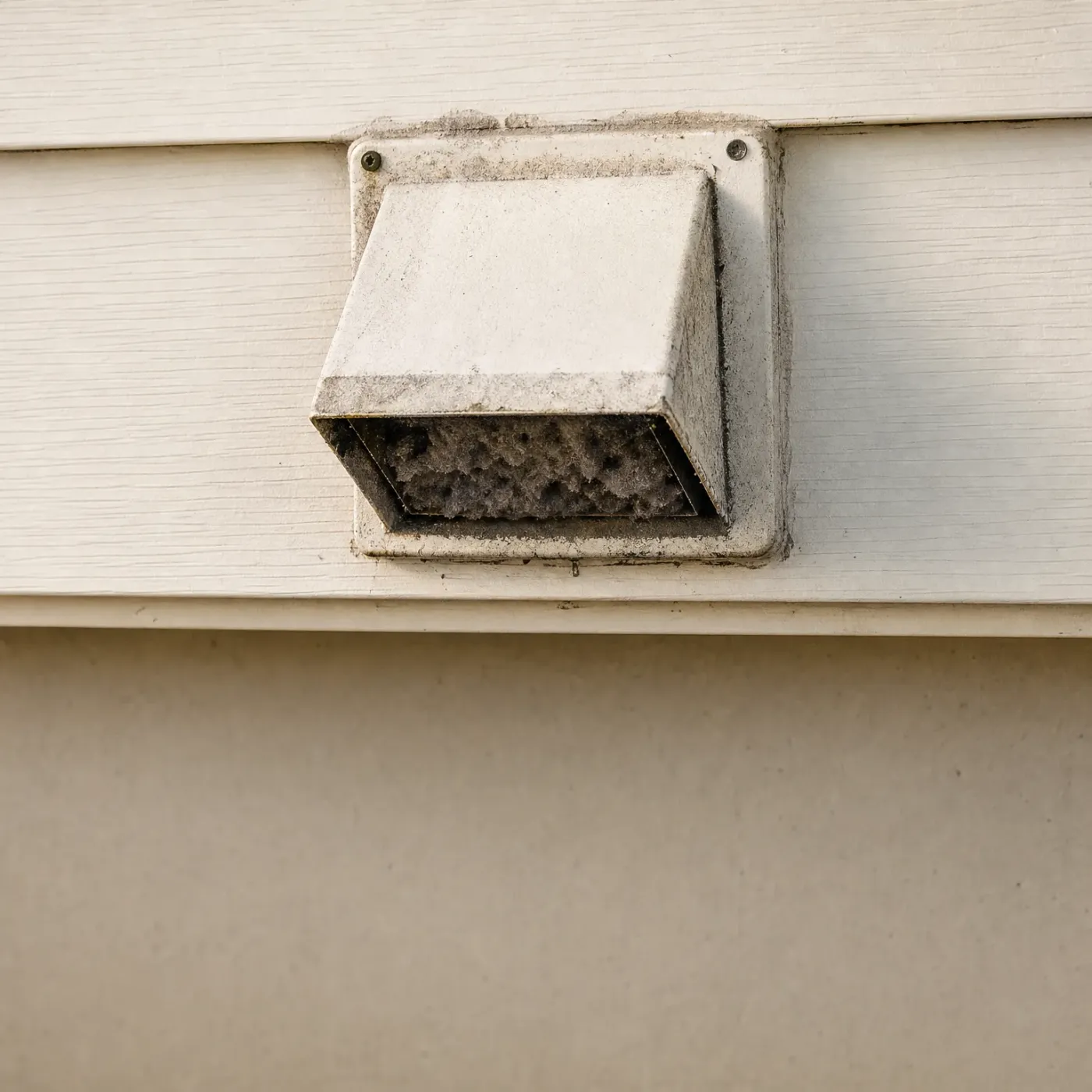
Lint has built up around the opening and across the grille, and the hood itself is coated in grime. That buildup is what props the flap open and gives a bird room to pack nest material into the duct behind it.
Towels and jeans come out warm but not dry, and you're running the cycle twice. The top of the dryer feels hotter than it used to. You might hear a faint scratching or chirping near the back of the machine or outside where the vent hood sits on the wall, especially in the early morning. Check the outside hood and you may find grass or twigs poking out from under the flap, or the flap sitting open instead of flush against the siding. Lint smell is stronger in the laundry room than usual. None of this fixes itself, and a vent that stays blocked keeps that hot, damp air pressed up against lint and framing right behind your dryer.
A licensed pro who works in Tulsa County gets your request.
Get matched with a pro who works on dryer vents in Tulsa County.
There's no charge for the request.
You've seen the flap outside hanging open or heard movement back there, and you're picturing how a bird got far enough in to actually build something. It seems like a tight space for a nest. It is, but birds don't need much room, and the duct gives them exactly the kind of spot they're looking for in spring.
A house sparrow or starling doesn't carry a finished nest in. It lands on the hood, pushes the flap open with its body, and drops in a twig or a few blades of grass just inside the opening. It leaves, comes back, adds more. Over several trips the material builds up right where the duct meets the hood, since that's as far as the bird needs to go to be sheltered from wind and rain. The duct is smooth and round, so the nest has nothing to grip until it's packed in tight enough to wedge against the sides. That's usually only a foot or so into the vent, not deep inside your wall.
A bird pulls twigs and grass through the propped-open flap.
Material packs into the duct between the wall and the hood.
The nest catches lint the dryer pushes through every load.
Hot, wet air backs up against the blockage with nowhere to go.
With 2.46 people in the average Tulsa County household, that dryer is running most days, maybe more than once. Every cycle pushes air against whatever's blocking the duct, and a nest that's merely slowing things down this week can choke the vent completely by next month.
ACS 2020-2024
If there's a bird in the vent right now, this isn't something to leave until the weather turns. A nest that's already packed into the duct keeps catching lint with every load, and the blockage only gets worse while you wait. The dryer runs hotter in the meantime, and that heat is sitting against lint behind a machine that runs most days in a house this size. Calling now gets a contractor out to clear the duct and fix the flap before the next load goes in, not after a few more weeks of drying times getting longer.
A contractor who works on dryer vents around Tulsa County sees this same problem every spring, house sparrows and starlings getting into hoods with a flap that's started sticking. They know what a packed nest looks like from the outside and what it takes to get a duct clear of it without just pulling out what's reachable from the hood end. Getting matched means one licensed contractor who handles this kind of work reaches out directly, not a handful of companies calling at once. You get someone who already knows what to look for before they show up.


A bird got into your dryer vent because the flap was propped open, and it's stayed packed with nest material because nobody's cleared it out. That's the whole problem. It's not a wiring issue or a dryer that's wearing out. It's a blocked duct, and until it's cleared, the dryer keeps pushing hot, damp air against something that won't move out of the way.
Once the duct and hood are clear, the flap closes again on its own, the way it's built to. Your dryer goes back to drying a load in one cycle. The fire risk that comes with trapped lint and heat behind the machine goes away with the blockage.
The duct running from your wall to the outside hood is built the same way in most houses across Tulsa County, which means this isn't a guessing game for a contractor who works on vents like yours through every season. They've seen where nest material tends to pack in behind the hood and what it takes to get it all out, not just the part you can reach with a flashlight.
Getting matched means one licensed contractor reaching out to you, not several companies competing for the job. One visit, one person who already knows what they're looking at before they get there. That's what gets your dryer, and your vent, back to doing what they're supposed to do.

Matched to your dryer vent job