Ducts doing their job
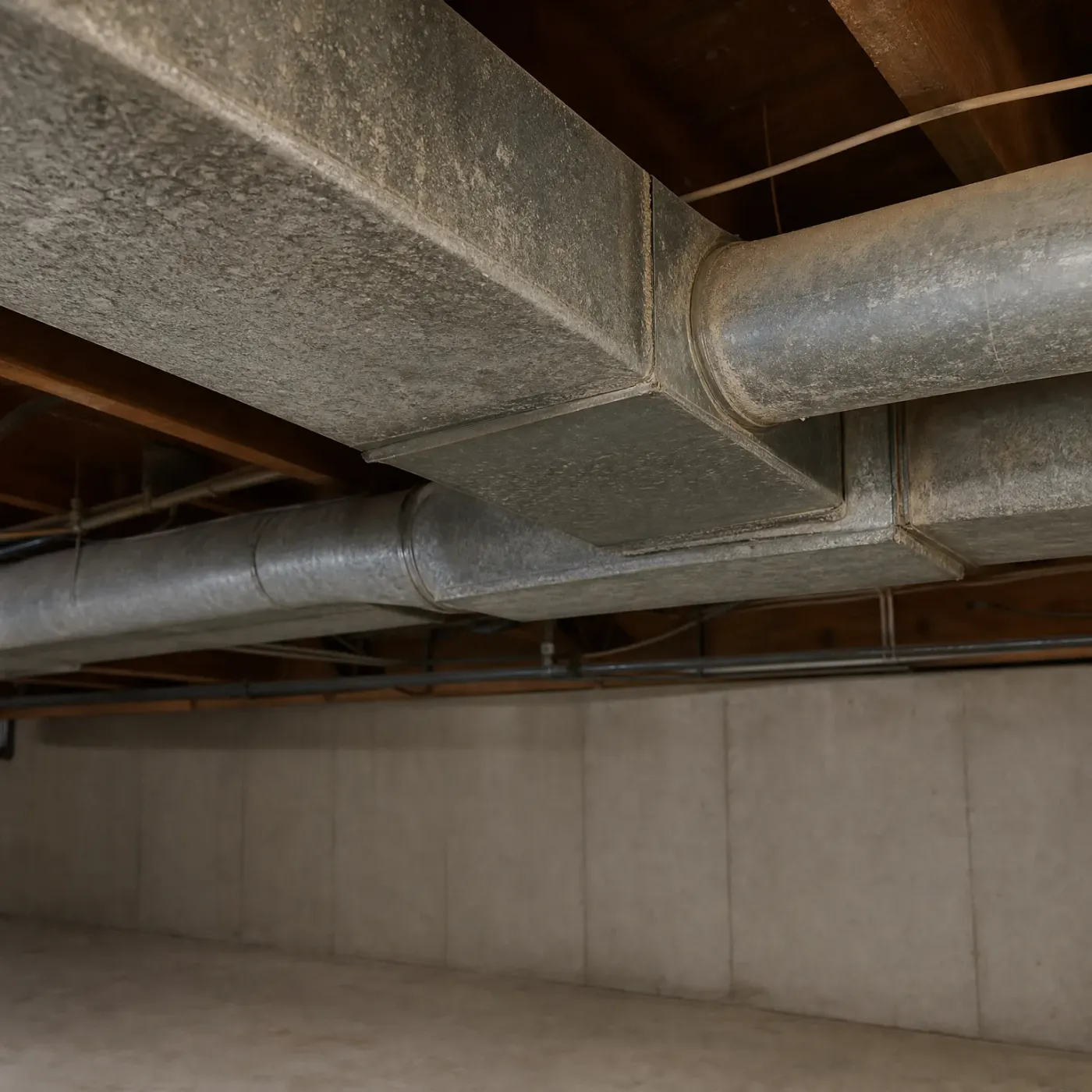
This is what a clean duct run looks like, metal trunk lines and flex duct overhead, carrying air without adding anything to it. No staining on the joists, no dust rimming the seams. Air moves through and that's all it does.

Dust that settles back on furniture within a day or two of cleaning, a musty smell when the system kicks on, or more sneezing indoors than out are usually what sends people looking for an answer. Around Norman, the furnace and AC run most of the year between the long muggy summer and the cold winter, so the ducts move a lot of air. That makes it worth knowing which signs actually point to the ductwork and which don't.
Dust that returns fast after you wipe it down is the clearest sign, since it means the system is stirring up more than it's filtering out. A musty or stale smell when the furnace or AC first kicks on points to moisture or debris sitting inside the ducts themselves. Weak airflow from one or two rooms while others feel fine often means a duct is blocked rather than the equipment failing. Visible dust or debris around the vent covers, or a vent that blows out a puff of dust when it starts, are signs worth checking too. With gas furnaces running most of the winter and AC running long into the fall here, ducts in Cleveland County homes move more air over the year than in milder places, which gives buildup more chances to show up in these ways.




Half the homes here were built by 1990
Half the homes in Cleveland County were built in 1990 or earlier. Older ductwork has had more years to collect dust, and more chances for a loose joint or a gap to let in attic or crawlspace air.
Heat runs November through April
Heat runs about six months a year here, November through April. That is six months of air pushed through the same ducts, carrying whatever has settled in them back into the rooms you live in.
Cooling runs May through September
Cooling runs about five months a year, May through September. Add it to the heating months and the system moves air through those ducts most of the year, with barely a break for dust to stay put.
ACS 2020-2024 · NOAA nClimDiv 1991-2020
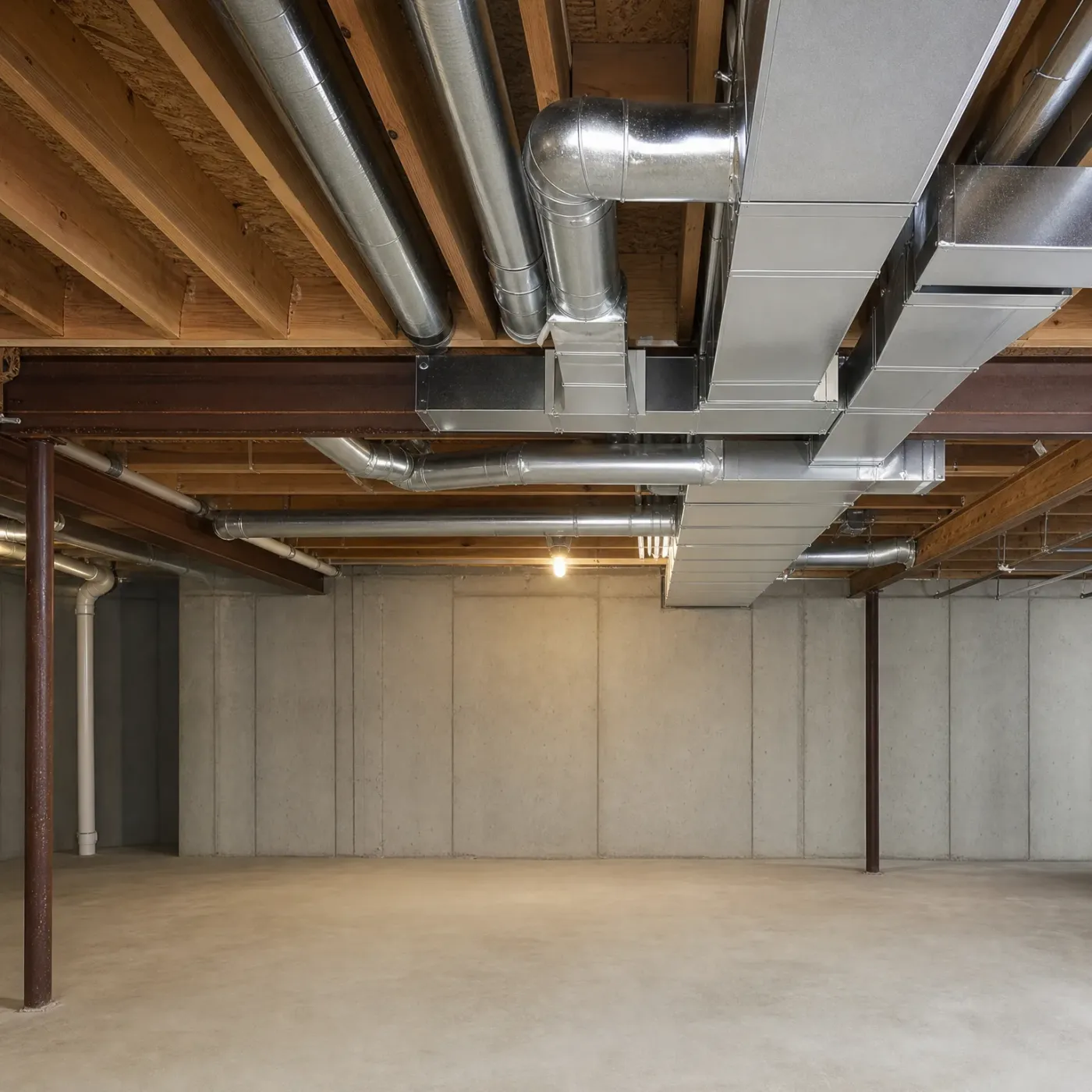
This is what a clean duct run looks like, metal trunk lines and flex duct overhead, carrying air without adding anything to it. No staining on the joists, no dust rimming the seams. Air moves through and that's all it does.
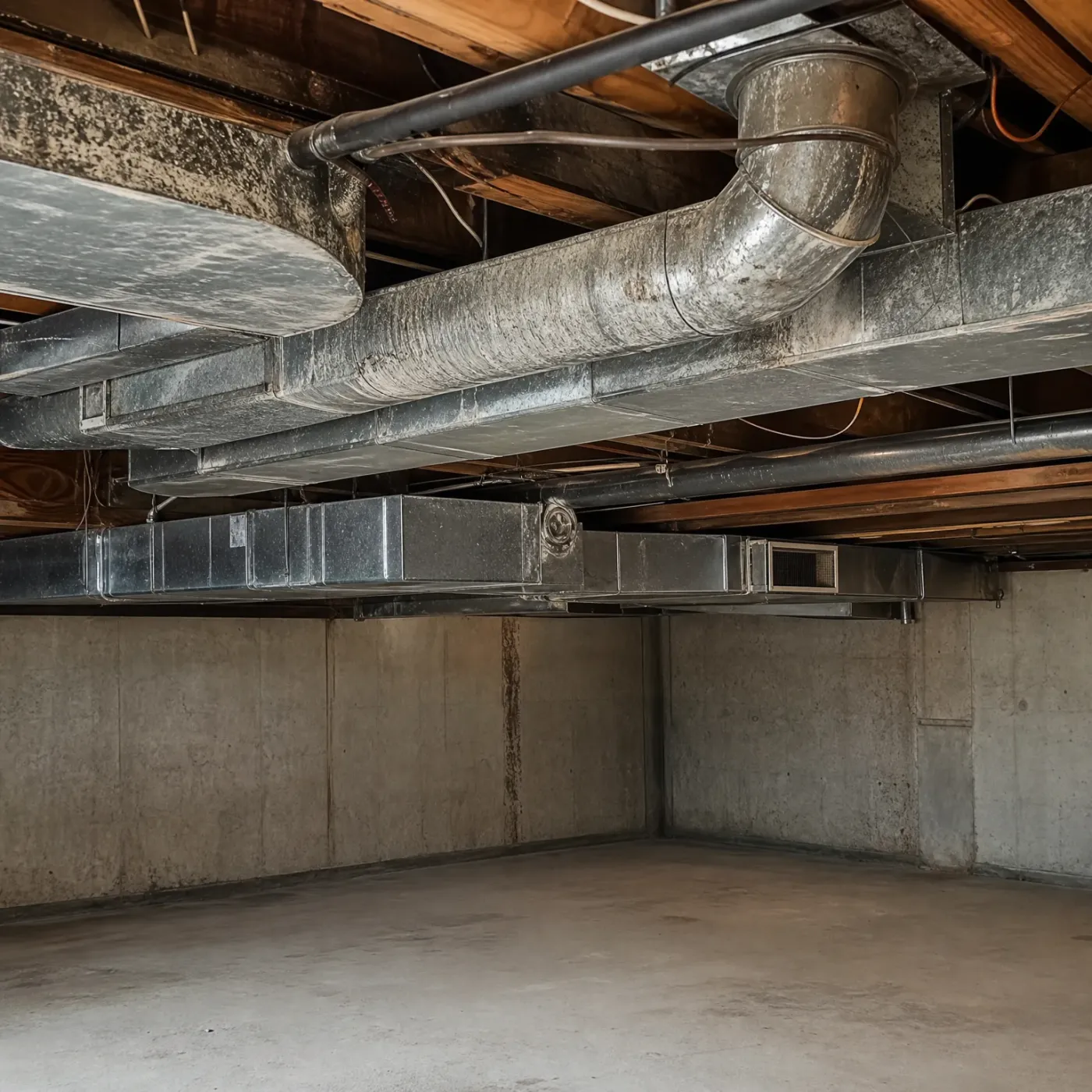
Dark staining on the wood and on the duct surfaces themselves points to moisture sitting where it shouldn't, often with dust and debris built up inside the metal. That combination is what starts the musty smell coming through your vents.
Dust and debris settle inside the duct run over months of normal airflow.
A loose joint or gap lets in attic or crawlspace air and dirt.
The blower pushes that buildup loose and sends it through every vent.
A technician cleans each run and seals the gaps that let dirt in.
You wipe down the TV stand and it's gray again by the next evening. The vents under the stairs or in the closet look dusty even though you just ran a cloth over them last week. Someone in the house is stuffed up at home but fine once they leave for work or school. Register covers have a dark ring around the edges that wasn't there before. Turn the system on and there's a stale, closed-up smell for the first minute or two, like a room that hasn't had a window open. None of this means the house is dirty. It means the duct run is holding onto what should be getting filtered out, and every time the blower kicks on, it's handing that back to the rooms you're sitting in.
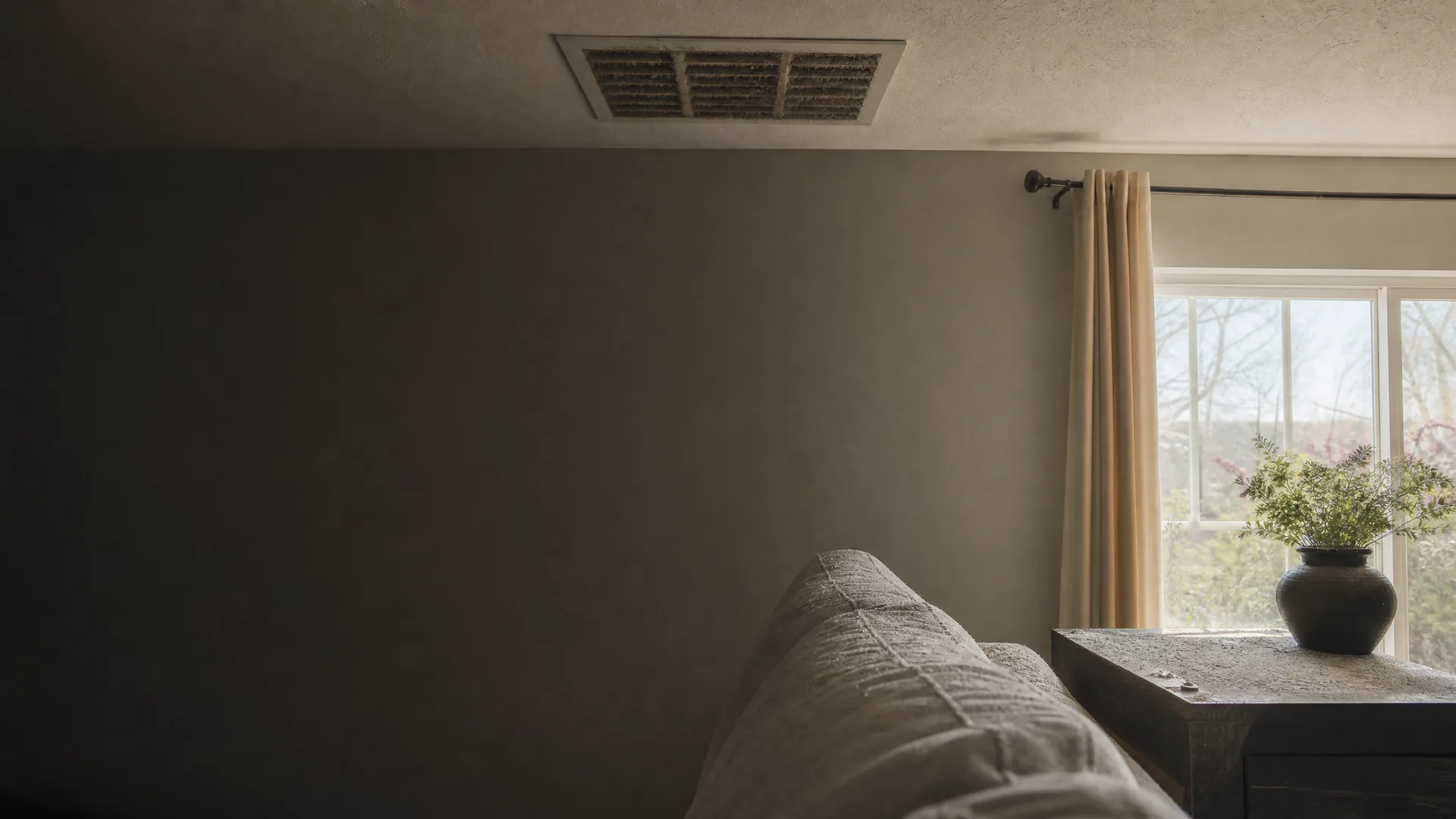
It's a Tuesday afternoon in April and the windows are open because it finally feels like it. You're sitting on the couch when a shaft of sun cuts across the room and lights up the ceiling vent, the one above the bookshelf you dusted last weekend. There's a gray ring of dust already sitting on the grille, and when you look down, a fine film has settled on the bookshelf top and the lamp beside it. You run a finger along the shelf and it comes away dark. The furnace hasn't run in days. The air conditioner only started up this week. Whatever's falling out of that vent has been sitting in the ductwork since winter, waiting for the first blast of moving air to shake it loose.
Skip searching for someone who cleans ducts in Cleveland County.
There's no charge for the request.
A technician runs a camera down the duct before cleaning anything. What shows up is usually dust built up thick enough to see in a beam of light, sometimes a dead rodent or insect debris near a joint, sometimes nothing more than a gray coating on the metal. That look tells a contractor whether the run needs a full cleaning or just the worst sections. It also catches a torn flex duct or a disconnected joint, the kind of gap that keeps letting attic or crawlspace air back in no matter how many times the ducts get cleaned.
Cleaning the duct run doesn't fix a gap that's pulling in crawlspace or attic air every time the blower kicks on. If a musty smell returns within a few weeks of a cleaning, that's usually why. The dust and the smell are a symptom. The opening letting outside air into the system is the cause, and it has to be sealed or the buildup just starts over. A contractor checking for this looks at the duct joints and connections, not just the inside of the metal, before calling the job done.


You find a duct cleaner, explain the dust and the smell, wait for a callback, then do it again with the next name on the list.
You describe what you're noticing once. Finding someone to look at the ducts stops being on your plate.

A duct run that's holding onto dust doesn't stay quiet about it. It shows up on your furniture, in your sinuses, and in what the furnace and AC have to push through to get air into the room. None of that fixes itself. The dust that resettles on your coffee table today will do the same thing next week, because the source is still up in the ceiling or under the floor, not on the table.
You could spend an afternoon calling duct cleaners around Cleveland County, describing the smell and the dust to each one, waiting on callbacks, then doing it again to compare what they quote. Or you could send one form, say what you're noticing once, and let someone qualified take it from there. Either way the house doesn't change on its own. What changes is how much of the legwork lands on you before anyone looks at the actual ducts.

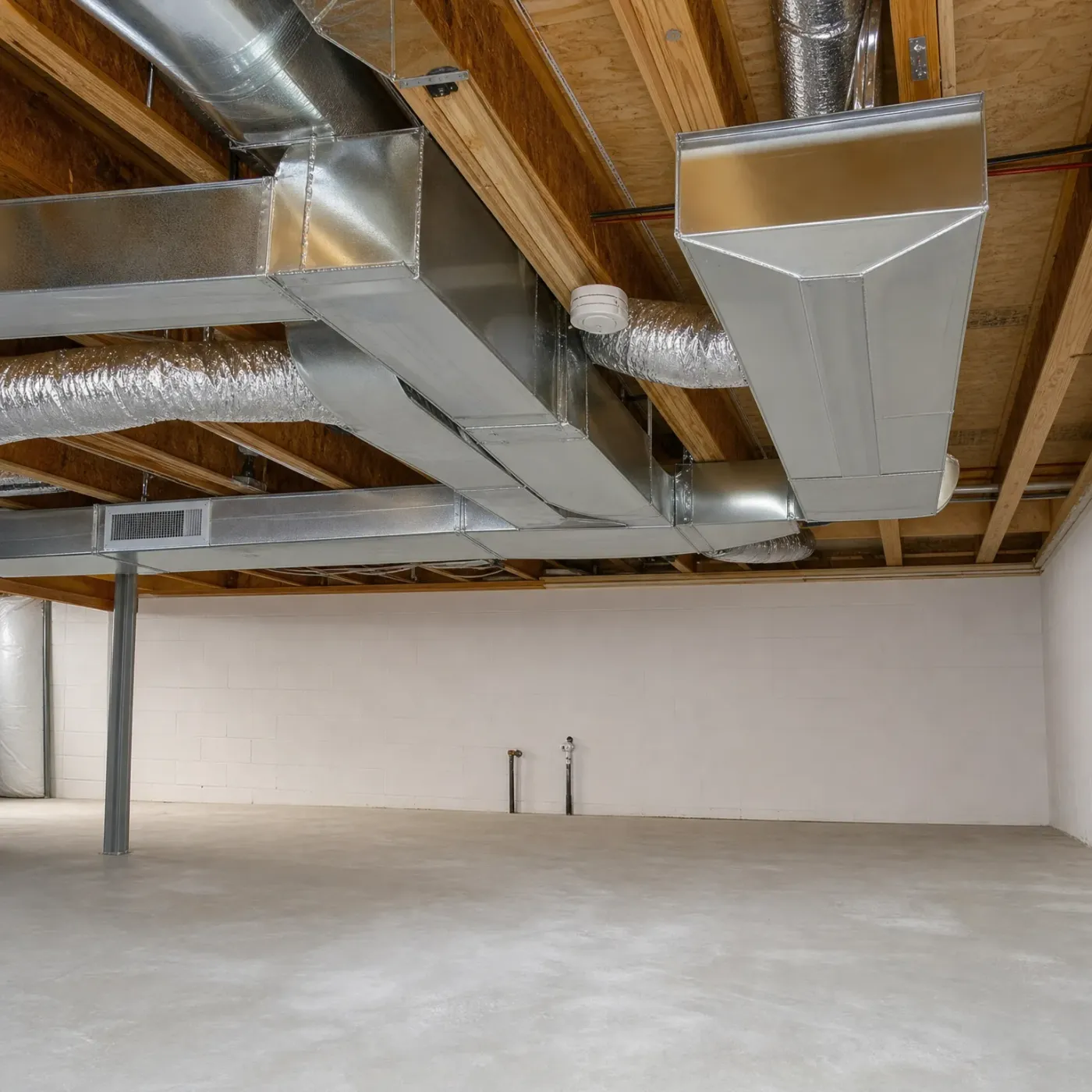
Metal trunk and flex duct overhead, bare concrete below, nothing hanging off the joists but the ducts themselves. No staining, no dust rimming the seams where sections meet. Air moves through and leaves nothing behind on its way to the vent.
The same kind of trunk line and branch duct, but every surface near them is coated gray. Dust has built up on the sheet metal itself and spread to the joists and the foundation wall nearby. That's buildup the blower has been stirring loose and pushing into the rooms upstairs.
At 12.60 cents per kilowatt-hour, running the blower harder than it needs to doesn't hit your bill the way it would somewhere else. The real cost of a dirty duct run shows up in what you're breathing and wiping off the furniture, not in the power bill.
EIA-861 2025
The dust coming back fast, the musty smell when the system starts, the sneezing that eases up outside: those are the signs, and either they match what you're seeing or they don't. Cleveland County's older housing stock gives ductwork more time to collect dust and more chances for a gap to let in attic or crawlspace air, which is part of why this comes up so often here. A camera run down the duct settles the question either way, so nobody's guessing. If what you're noticing doesn't go past a one-time dust spell or a smell that's really coming from a damp crawlspace, you can leave the ducts alone. If it's been going on for weeks, or someone in the house is more stuffed up indoors than out, the buildup is sitting in the duct run right now, and the furnace and AC are pushing air through it every time they run. None of that changes on its own.
What usually slows people down isn't deciding whether to clean the ducts. It's finding someone to do it: looking up duct cleaners, calling a few, describing the dust and the smell, waiting on callbacks, then doing it again with the next name because the first one never called back. One form here covers that part. You describe what you're noticing once, and the search, the calls, and the repeating stop being your problem. What's left is the actual decision, clean or don't, and you're the one who's seen the vents and wiped the furniture, so you're the one who knows which way it goes.

Asking costs nothing, and the choice to hire stays yours.
You've already noticed the dust, the smell, or the sneezing. Sending the request means you describe it once, and the work of finding someone who can look at your ducts is no longer sitting on your list.