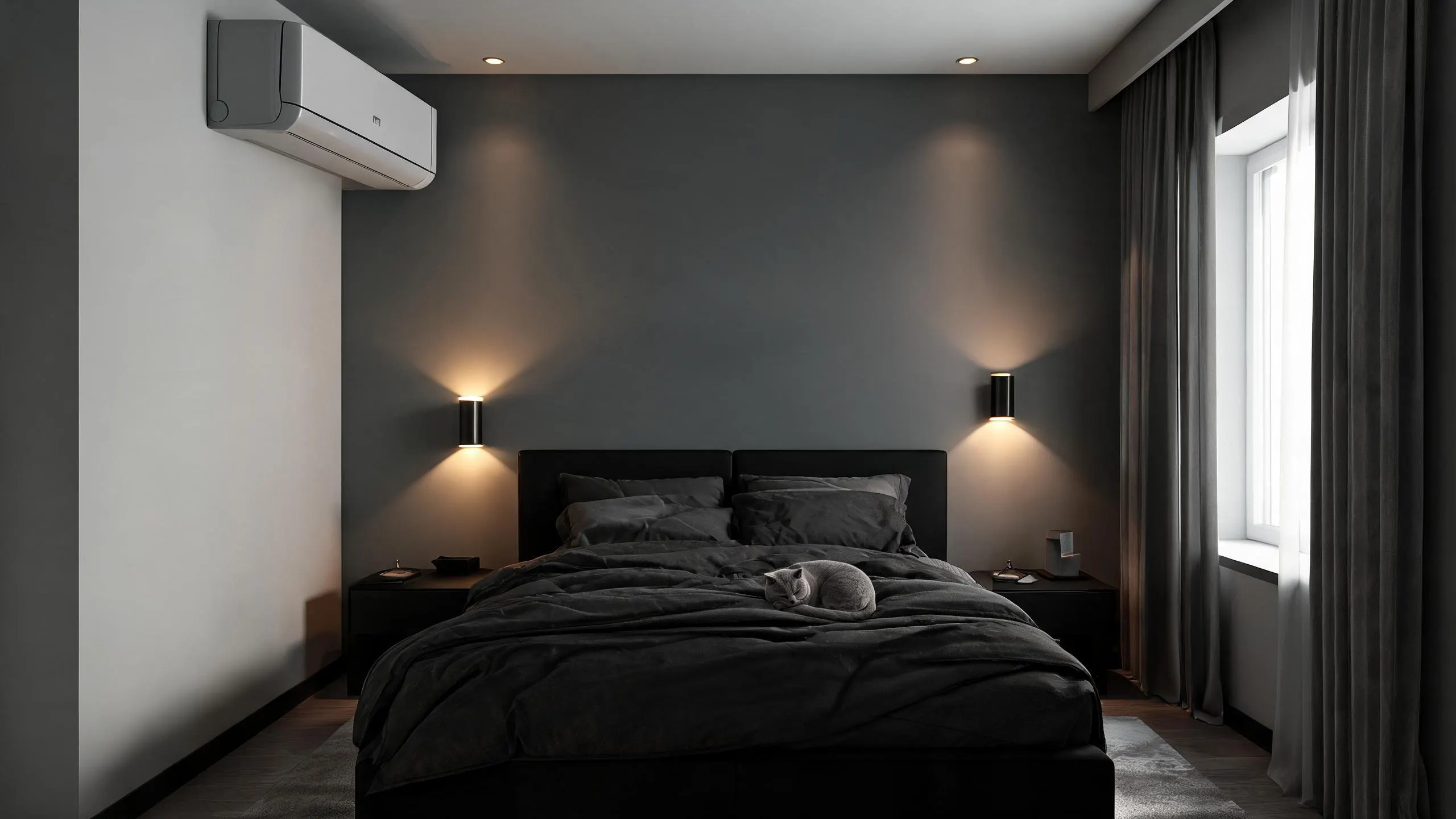
Mini Split Installation in Tahlequah, OK
A new system here will heat from October through April and cool from May through September every year. Tell us about the house, and a licensed contractor who covers Cherokee County will get in touch.
Tell us about the job
It takes about a minute.

Twelve months of work either way
Tahlequah asks a mini-split to run nearly the whole year. Winter nights average 30°F from December through February, and the system needs to hold heat from October through April, seven months straight. Summer afternoons average 90°F, and cooling runs May through September. That leaves the unit almost no season off.
Any mini-split installed new has to meet the federal minimum for a split-system heat pump, 14.3 SEER2 for cooling and 7.5 HSPF2 for heating. With Cherokee County averaging nine winter storms and 58 damaging wind events over the past ten years, and a quarter of Oklahoma households losing power for at least a day in 2024, it's worth knowing a mini-split heat pump has no pilot light to relight and comes back on by itself once power returns.
- 7 months
- October through April, your system heats
- 5 months
- May through September, it cools
- 30°F
- the average winter night it heats against
- 90°F
- the average summer afternoon it cools against
NOAA nClimDiv, 1991–2020 normals
Oklahoma requires HVAC contractors to hold a state license.
The Construction Industries Board issues that license, and it belongs to the contractor, not to any single job. That means the same license covers a furnace swap, a water heater, or the mini-split going into your home in Cherokee County. It's a record the state keeps on the business doing the work, not a permit tied to this installation.
The license is what stands behind the contractor here, but in most cities and counties the job itself still needs a permit from the local building office, with an inspection once the work is done. That covers the installation itself, apart from what the state has on file about the contractor.
Source: Oklahoma State Legislature
- Is a mini split worth it?
- For most homes it is, especially if you're heating with electric resistance now. A mini split moves heat instead of generating it, so it gets more heat out of the same electricity than baseboard or wall units. Winters here run cold enough, 30°F on average overnight, that you want a unit rated for real heating, not just a cooling add-on. Units built now also meet the federal minimum of 7.5 HSPF2 for heating and 14.3 SEER2 for cooling, so that part is settled before you even compare models. A contractor can price the job once they know your home's layout.
- How many rooms can a mini split cover?
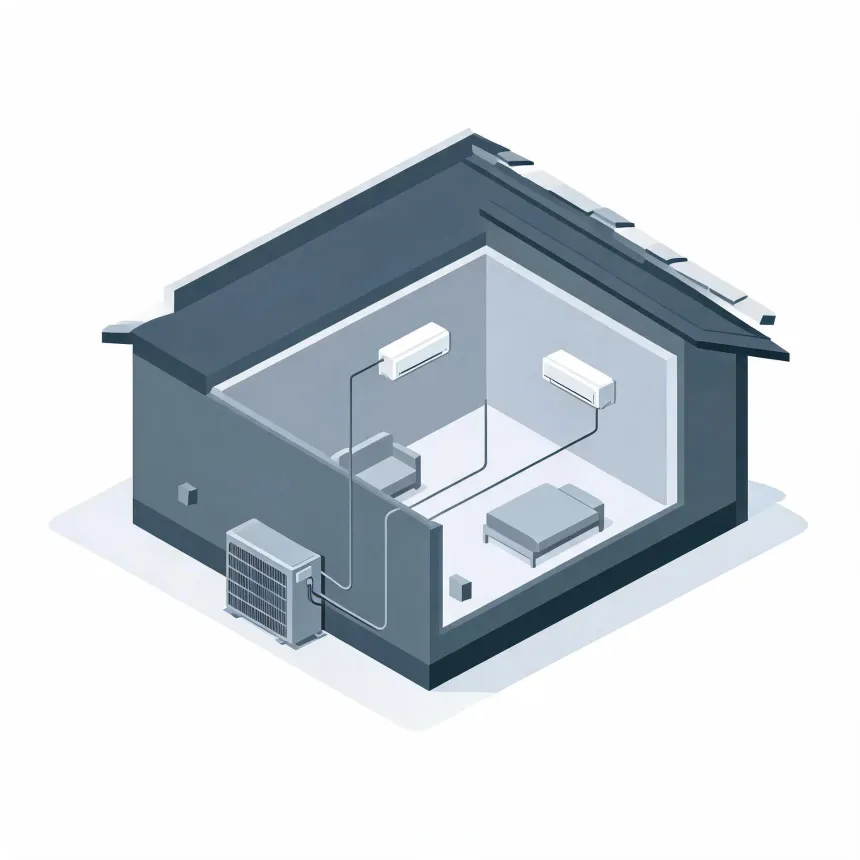
- One outdoor unit can serve a single room or several, depending on how many indoor heads it's paired with. A single-zone system is built for one room or one open area. A multi-zone system splits output across the rooms it feeds, so adding zones means each one gets a share of the total capacity, not the full output. A contractor sizes the system against the square footage and layout of each room, not just the number of doors down the hall.
- Can a mini split heat a whole house?
- Yes, if it's sized and placed for the whole house from the start, not added to one room as an afterthought. That means an indoor head reaching every room, and a system rated to keep up on the coldest nights, not just a mild fall evening. Heat is needed here from October through April, with winter lows averaging 30°F, so the sizing has to hold up over that full stretch. A contractor will size the system against the house's layout and insulation to confirm it can carry the whole load.