
Duct Cleaning in Tahlequah, OK
Tell us about your home, and a licensed contractor who covers Cherokee County will get in touch.
Tell us about the job
It takes about a minute.

Seven months of heating pushes dust through your ducts
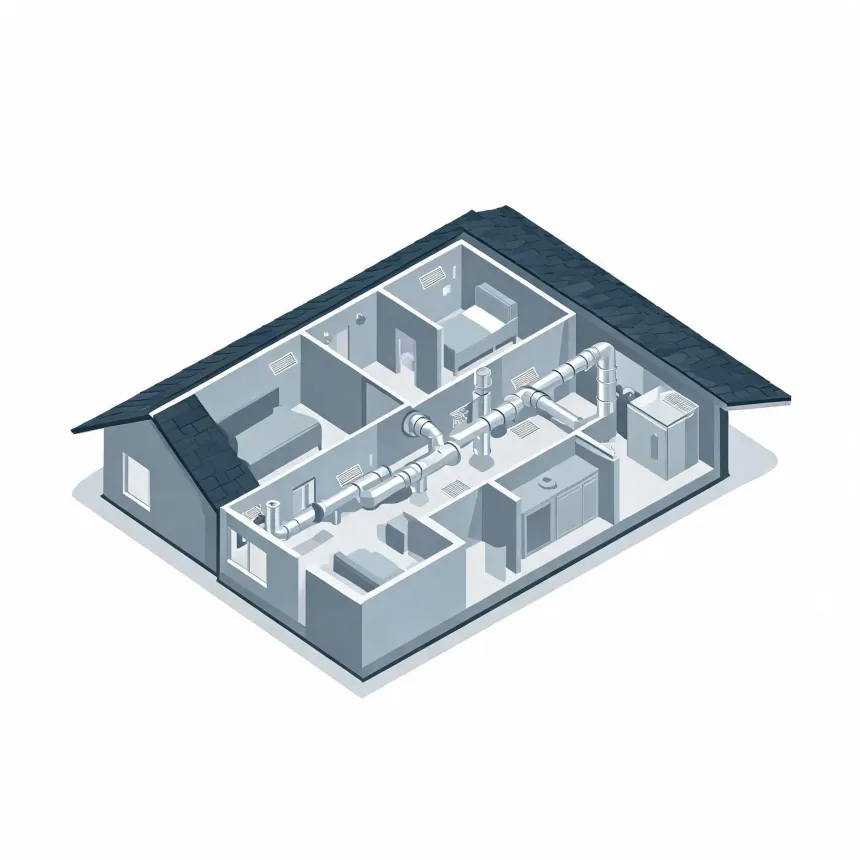
Your furnace runs October through April here, close to seven months a year. On the cold nights that average 30°F through December through February, it cycles on and off for hours at a stretch, and every cycle pushes air, and whatever is riding in it, through the same ducts.
Cherokee County has also seen its share of wind, with 58 damaging wind events and 9 winter storms over the last ten years. A storm knocks the power out often enough that a quarter of Oklahoma households went at least a day without it in 2024. When the furnace sits idle and then kicks back on, it stirs up whatever settled in the ducts while it was off. Over enough winters, that buildup lines the duct walls and gets pushed into the rooms every time the furnace runs.
- 7 months
- October through April, your furnace pushes air through your ducts
- 5 months
- May through September, your air conditioner does the same
NOAA nClimDiv, 1991–2020 normals
- How often should air ducts be cleaned?
- A contractor can tell you by looking, since it depends on what's actually built up inside the ducts rather than a fixed schedule. If anyone in the house has allergies, or you've had remodeling work that left drywall dust behind, that's reason to check sooner. Homes here run the furnace seven months a year, October through April, and that much air moving through the ducts carries more dust into them than a shorter heating season would.
- Is air duct cleaning worth it?
- It's worth it if there's real buildup inside the ducts, not just as routine upkeep. A contractor can look with a camera and show you what's in there before you pay for a cleaning you may not need. Dust blowing out of the vents when the furnace kicks on, or debris visible around the vent covers, are both signs worth having checked.
- What does air duct cleaning involve?
- A contractor connects a vacuum system to the ductwork, then uses brushes or air tools to loosen dust and debris from inside the duct walls so it can be pulled out through the vacuum rather than resettling further down the line. Every supply and return vent in the house gets covered, not just the ones that look dirty. The vent covers come off and get cleaned as well, since dust collects behind them as much as inside the duct itself.