Heat Pump Installation in Durant, OK
A new system here will heat from November through March and cool from May through September every year. Tell us about the house, and a licensed contractor who covers Bryan County will get in touch.
Tell us about the job
It takes about a minute.
Ten months of the year, one of the two
Durant asks for heat from November through March and cooling from May through September. That is ten months where your heat pump is either one or the other, with only a short break in between. Winter nights average 34°F, mild enough that the heat pump can carry the house without much strain. Summer afternoons average 93°F, and that is the harder side of the work, the compressor running hard most afternoons for five straight months.
Any split-system heat pump installed new now has to meet 14.3 SEER2 for cooling and 7.5 HSPF2 for heating. That is the federal floor. With this much of the year riding on the unit, where it sits above that floor is worth asking about before it goes in.
- 5 months
- November through March, your system heats
- 5 months
- May through September, it cools
- 34°F
- the average winter night it heats against
- 93°F
- the average summer afternoon it cools against
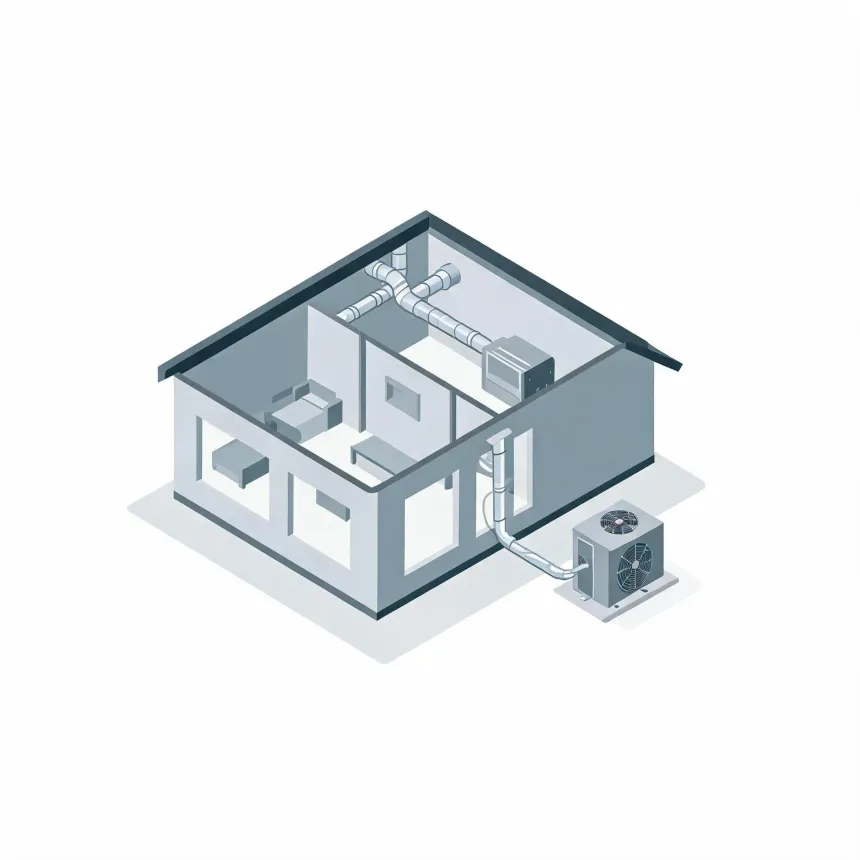
NOAA nClimDiv, 1991–2020 normals
Oklahoma requires HVAC contractors to hold a state license.
The Construction Industries Board licenses the contractor who installs your heat pump. That license is tested and kept on record by the state, and it covers the contractor as a business, not this specific job.
In most cities and counties, an installation like this needs a permit from the local building office, with an inspection once the work is done. That inspection is what checks the installation itself, the refrigerant lines, the electrical connections, the way it ties into your system, separate from what the state license already tells you about the contractor.
Source: Oklahoma State Legislature
- Is a heat pump better than a furnace?
- A heat pump does both jobs a furnace can't, heating and cooling from one system, and that matters here since homes need one or the other 10 months of the year. Winter nights average 34°F, which a heat pump handles fine, since it only really struggles once temperatures drop well below that. A furnace only heats, so you would still need a separate air conditioner for the 93°F summer afternoons. Which one makes sense for a given house depends on the ductwork and the equipment already in place, so a contractor should look at the specifics before you decide.
- What's the difference between a heat pump and an air conditioner?
- An air conditioner only moves heat out of your home. A heat pump does that same job in summer, then reverses itself in winter and moves heat into your home instead. That's why a heat pump can replace both a furnace and an air conditioner, while an air conditioner alone leaves you needing a separate heat source for the months your home needs warmth.
- Does a heat pump work in cold weather?
- Yes, a heat pump keeps working in cold weather, though it loses some efficiency as the temperature drops. Winter nights here average 34°F, which is well within the range a heat pump handles without trouble. Newer heat pumps are built to meet federal efficiency minimums, and a contractor can size and set up the system so it keeps up with the coldest nights this area sees.