

Quiet and running right
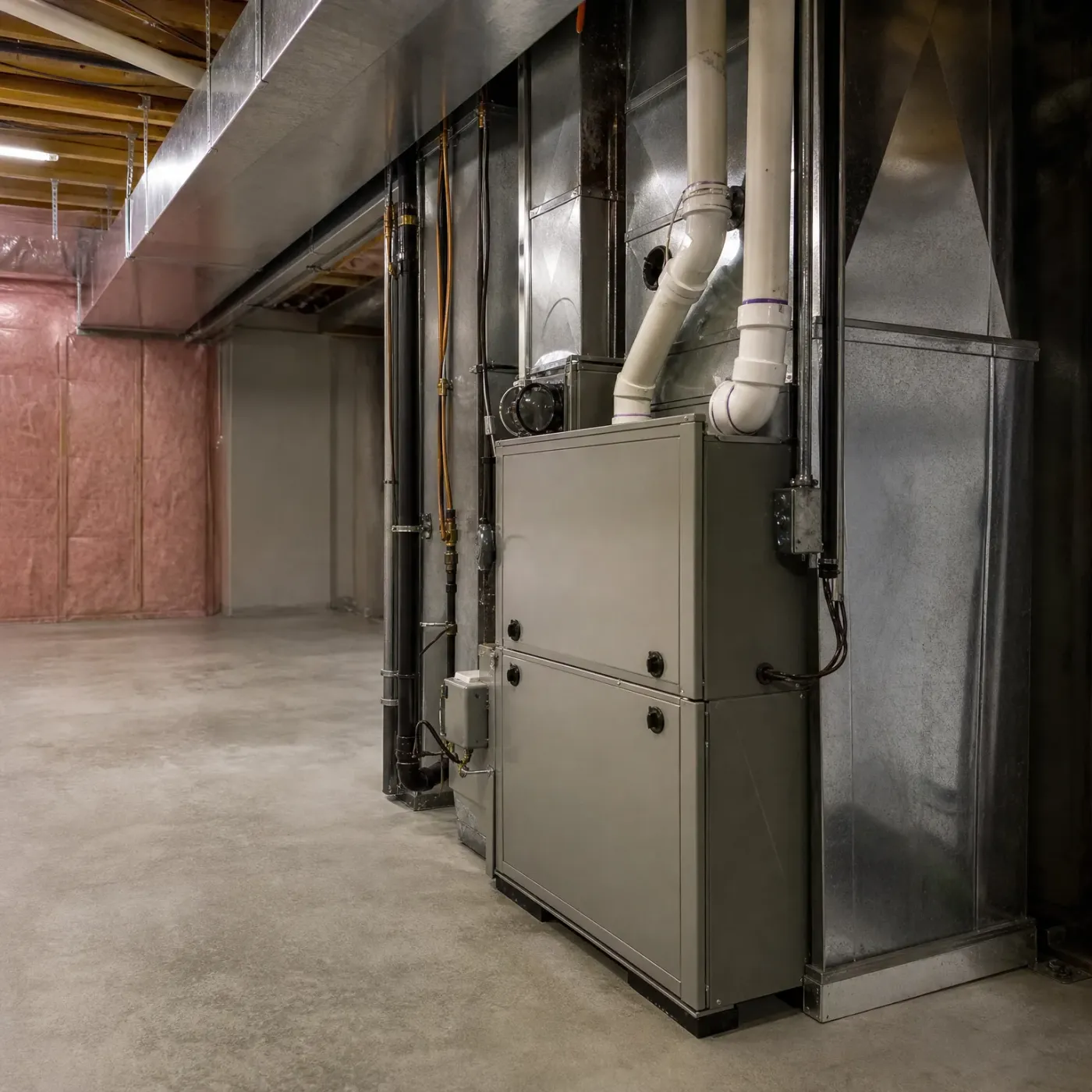
A furnace in good shape runs smooth. Air moves through the plenum steady, the gas line sits tight, and the cabinet panels stay snug against the frame. Nothing shakes loose because nothing's working to shake it loose.
Describe your furnace job, and a local pro who handles it gets in touch.
Connect with a proA rattle usually means something inside the furnace has come loose. Gas furnaces run a lot of hours during an Oklahoma winter, and all that cycling works screws and panels loose over time. The loudest culprit is often the blower door or an access panel that isn't sitting flush, which lets the cabinet buzz every time the blower kicks on. It can also be a loose duct connection right at the furnace, a bent or dragging blower wheel, or a heat exchanger that's cracked and ticking as it expands and contracts. Some of these are a five minute fix, tightening a panel or a screw. Others, like a damaged blower wheel or a cracked exchanger, mean the furnace needs to come apart and get looked at by someone who knows what they're hearing. A cracked exchanger in particular isn't something to leave alone, since it can let combustion gases into your air.

A furnace in good shape runs smooth. Air moves through the plenum steady, the gas line sits tight, and the cabinet panels stay snug against the frame. Nothing shakes loose because nothing's working to shake it loose.

An older furnace with louvered panels has more seams and more screws, and more places for a rattle to start. Once a panel works loose or a duct connection shifts, the furnace keeps running, just not quietly, and the noise usually gets worse before it stops.


Most of these are small parts working loose rather than the furnace failing outright. The blower wheel can wobble on its shaft if a set screw backs out, and you'll hear that as a steady tick that matches the blower's speed. The inducer motor runs every single cycle all winter, and its vibration is what walks screws loose on the igniter bracket, the flame sensor, and sometimes the ductwork seams themselves. A bearing wearing out in that same inducer motor turns what should be a quiet hum into a grind or a rattle right when the burners fire. Return grilles and filter racks are built to come apart for cleaning, so a little play there is normal, but it's often the loudest sound in the house. One cause is worth treating differently than the rest. A cracked heat exchanger can tick as the metal flexes with the heat, and that's not a loose screw you can wait on. A qualified tech can tell the difference between a part that needs a screwdriver and one that needs a closer look.


Your request goes to one pro, not a list of companies.
Say what's going on with your furnace, and a pro who works on them reaches out.
You're not committing to anything by asking.
That first few seconds of startup is when a furnace works hardest against still metal and a motor that hasn't built up speed yet. If the rattle shows up right there and then disappears, it's pointing at something specific, not a general problem with the unit. You've probably noticed it happens the same way almost every time the thermostat calls for heat, which is itself a clue worth paying attention to.
When burners light, the igniter clicks and gas ignites with a small thump that can shake a loose panel or flue connection for a second. Once the flame settles, that vibration stops. The other common cause is the blower motor spinning up. A blower wheel with a loose set screw wobbles hardest right as it comes up to speed, then quiets once it reaches a steady rpm. Either way, the noise at startup means something is vibrating against metal only while things are moving or expanding fastest, not once the system has settled into a steady burn. A furnace repair technician can tell which one it is by watching a full cycle start to finish.

This is what a furnace sounds like when nothing's loose. The blower spins true on its shaft, the ducts carry air without ticking, and every panel sits flush against the cabinet. The flue draws straight and the gas line stays put. It just runs.

This furnace has had time to work parts loose. Years of cycling on and off have left a panel or a duct joint shaking with every startup, and the grime says it's been a while since anyone opened it up. Left alone, a rattle like this tends to get worse, not better.




The igniter glows and the gas valve opens to light the burners.
Burners heat the heat exchanger as the blower waits to start.
The blower motor spins up and the wheel can wobble if loose.
Moving air flexes the ductwork and shakes any loose panel or screw.
Winter nights in Oklahoma average 30°F, so your furnace is firing on and off most of the night, every night, for months. That's a lot of cycles working any loose screw or panel looser, which is usually when the rattle gets worse.
NOAA nClimDiv 1991-2020 county normals weighted by homes
A furnace that rattles is almost always telling you something worked loose, not that it's failing. A blower wheel ticking on its shaft, a panel that's vibrated away from the cabinet, a set screw that backed out somewhere along the line. Oklahoma winters give a furnace months of steady on-off cycling, night after night, and that's exactly the kind of use that loosens screws and panels rather than letting them settle back in. Left alone, a loose part doesn't fix itself. It wears against whatever it's rubbing on until the noise gets worse or something around it gives out too.
Finding the source takes someone who knows where furnaces like yours tend to come loose first, which is why this matters more than it sounds like it should. A contractor who services furnaces all winter in Oklahoma has heard this exact rattle plenty of times and knows whether to check the blower door, the set screw on the wheel, or the ductwork before touching anything else. Getting matched means one licensed local contractor takes the call, not several companies competing for your business. One visit, one person who already has a good guess before they open the cabinet. Once the loose part is found and tightened back down, the furnace runs the way it did before, quiet through the rest of the season.

The pro who reaches out is licensed in Oklahoma.