Mini Split Installation in Yukon, OK
A new system here will heat from October through April and cool from May through September every year. Tell us about the house, and a licensed contractor who covers Canadian County will get in touch.
Tell us about the job
It takes about a minute.
Yukon asks a mini-split to run almost year round
Winter nights here average 29°F. Summer afternoons average 92°F. That is a wide spread for one system to cover, and Yukon barely gives it a break. Heat runs October through April, seven months. Cooling runs May through September, five months. Together that is the whole year.
A new mini-split has to be sized for both ends of that range, not just the mild months between them. Any unit installed today, ductless or not, has to meet the federal minimum for split-system heat pumps. That is 14.3 SEER2 for cooling and 7.5 HSPF2 for heating. Past that minimum, how the installer sizes and places the unit decides how well it holds up on a 29°F night or a 92°F afternoon.
- 7 months
- October through April, your system heats
- 5 months
- May through September, it cools
- 29°F
- the average winter night it heats against
- 92°F
- the average summer afternoon it cools against
NOAA nClimDiv, 1991–2020 normals
Oklahoma requires HVAC contractors to hold a state license.
The Construction Industries Board tests and licenses the contractor, not the job itself. So the license tells you the person or business behind the work has met the state's requirements. It does not mean a state inspector checks your particular mini-split once it goes in.
That checking happens locally. Installing a mini-split in Canadian County means running new refrigerant lines and mounting equipment that affects the whole home, and most cities and counties require a permit for that kind of work along with an inspection once it's done. Between the license and the local permit, one covers who is doing the work and the other covers whether this specific installation was done right.
Source: Oklahoma State Legislature
- Is a mini split worth it?
- For most homes it is, especially where a room or addition never gets the right temperature from the main system. A mini split heats and cools that space directly, so it earns its keep faster in a home that already runs the furnace October through April and the AC May through September. It also gives you a backup way to heat or cool part of the house if the main system ever goes down, which matters here given how often winter storms and high wind events knock out power. A contractor can look at the space and tell you what size unit fits it.
- How many rooms can a mini split cover?
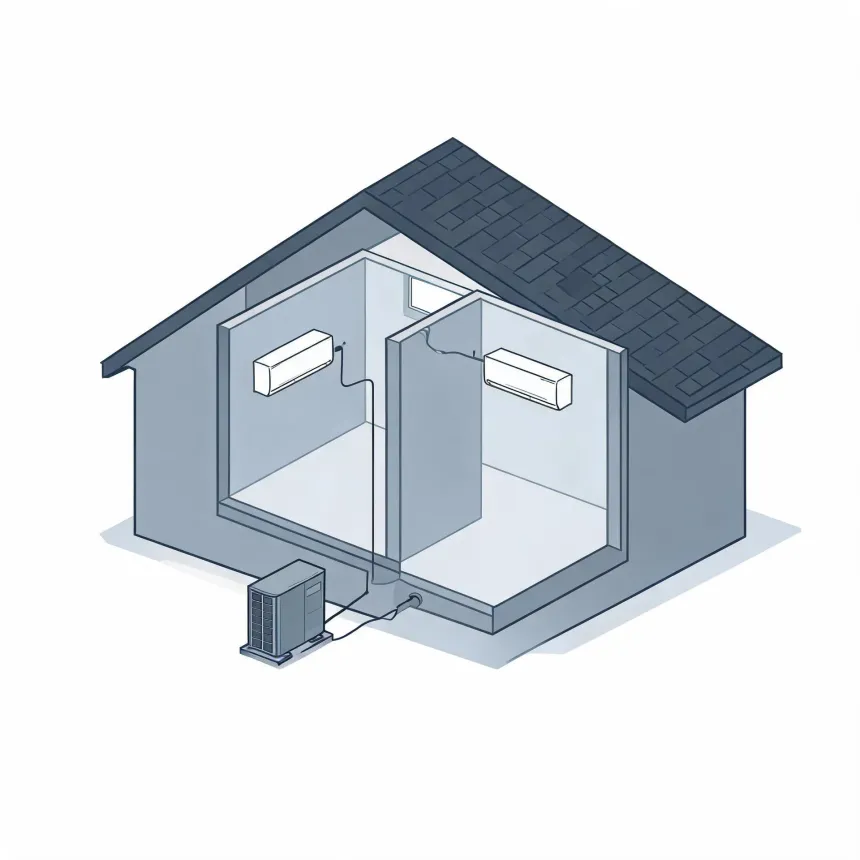
- A single-zone mini split covers one room or open area. If you need more than one room covered separately, a multi-zone system connects several indoor units, each with its own thermostat, to one outdoor unit. How many zones a house can run depends on the outdoor unit's capacity and the layout, so a contractor will need to see the house to say how many rooms one system can carry.
- Can a mini split heat a whole house?
- A multi-zone mini split can heat a whole house if it has enough indoor units placed to reach every room, and heat pump mini splits are built to work as the main heat source, not just a supplement. Winters here average 29°F at night from December through February, so the system has to be sized for that low, not just for mild days. A contractor can size it against your coldest nights and tell you whether a whole-house layout works for your home.