
Duct Cleaning in Chickasha, OK
Tell us about your home, and a licensed contractor who covers Grady County will get in touch.
Tell us about the job
It takes about a minute.
Step 1 of 3: Equipment

Six months of heating pushes air through the same ducts
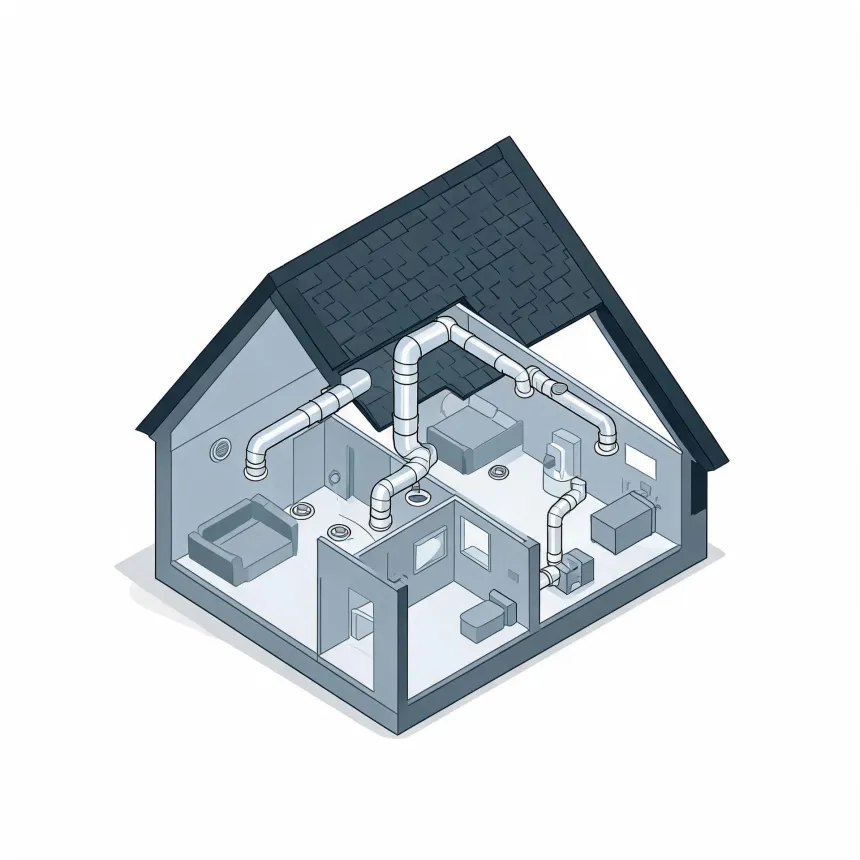
Your ducts move air through the house from November through April, six months of the year. Every time the furnace kicks on to fight off a 30 degree night, it pushes dust and whatever has settled in the ductwork right along with the warm air.
Grady County has seen 145 damaging wind events and 7 winter storms over the last ten years. Wind drives dust and debris into the house through every gap it can find, and it settles in the ducts along with everything else already there. That buildup sits in the line and rides the airflow into every room the duct feeds.
- 6 months
- November through April, your furnace pushes air through your ducts
- 5 months
- May through September, your air conditioner does the same
Jan
Feb
Mar
Apr
May
Jun
Jul
Aug
Sep
Oct
Nov
Dec
NOAA nClimDiv, 1991–2020 normals
- How often should air ducts be cleaned?
- There's no fixed schedule that fits every house, but a contractor can tell you what your ducts need by looking at them. Signs it's time include dust coming out of the vents, a musty smell when the furnace or AC runs, or work done nearby that left debris behind. Homes here that have been through a bad windstorm are worth checking afterward too, since damage near the ductwork can let in debris or outside air.
- Is air duct cleaning worth it?
- It's worth it when there's a real reason for it, like visible dust blowing out of the vents, a musty smell when the system runs, or recent work that left debris in the ducts. It won't lower your heating bill or fix a furnace that's struggling. A contractor can look at your ducts and tell you whether cleaning will actually help your situation.
- What does air duct cleaning involve?
- A contractor connects a vacuum system to the ductwork and uses brushes or air tools to knock loose dust and debris, then pulls it out through the vacuum. Every supply and return vent gets opened up so the whole system gets covered, not just the parts you can see. The furnace or air handler itself usually gets checked too, since dust collects around the blower and coil.